





















Ahead of the 2027 general elections, the G100 political movement and the Minority Caucus of the House of Representatives have intensified efforts to unite opposition parties and political actors under a common platform capable of challenging the ruling All Progressives Congress (APC).
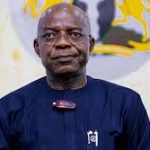
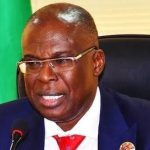
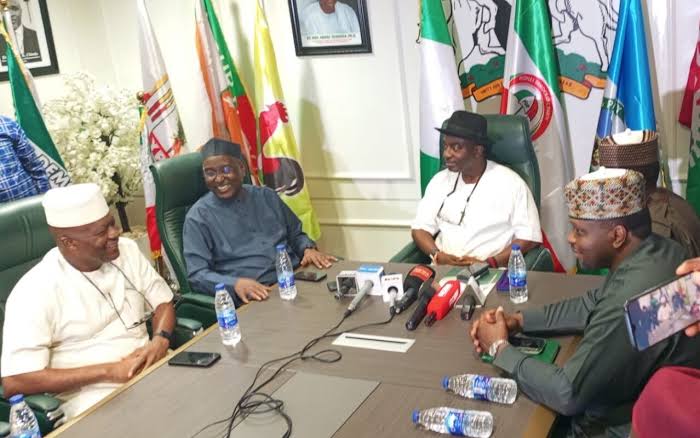
The latest move followed a meeting between a delegation of the G100, led by its Convener, Salihu Lukman, and members of the House Minority Caucus led by Minority Leader, Fred Agbedi, at the National Assembly Complex, Abuja.
The meeting was part of consultations by the G100 ahead of its proposed Summit of Opposition Political Parties scheduled for August 31.
The initiative is coming amid growing concerns that divisions among opposition parties could weaken their chances of mounting an effective challenge to the APC in 2027.
Speaking after the meeting, Agbedi described the engagement as successful, saying it had strengthened the partnership between the G100 and the Minority Caucus.
He said both sides had agreed to work together to strengthen democracy and provide Nigerians with a credible alternative ahead of the elections.
“We had just had a successful meeting and in the meeting we concluded that this is the consummation of the alliance partnership, working together of the Minority Caucus of the House of Representatives and the G100, fusing into one to ensure that we play an active role in enriching democracy in Nigeria,” Agbedi said.
The Minority Leader called on opposition parties, political leaders and presidential aspirants to set aside personal ambitions and negotiate a common political arrangement capable of challenging the APC.
He said the economic and social difficulties facing Nigerians made opposition unity more urgent.
“We also decided that we use this opportunity to call on all opposition stakeholders, particularly the leaders of the various parties and presidential candidates, to begin to develop the attitude of working together,” he said.
Agbedi urged opposition politicians to embrace cooperation, stressing that no individual or political party could achieve the desired change alone.
“I want to call on all members of opposition, no matter the party you belong, no matter your ambition, that there is strength in unity and that the opposition should unite to ensure that we wrestle power from the APC in 2027,” he said.
Earlier, Lukman, a former APC National Vice Chairman, said the G100 was driven by concerns over the political direction of the country and the inability of opposition forces to coordinate effectively.
According to him, the movement was established to persuade opposition parties and political actors to negotiate a common political arrangement rather than promote the interests of individuals, parties or organisations.
“Our mission is simple. It was a follow-up to the open letter we issued to our leaders, which you are part of that leadership, and we all came together out of concern,” Lukman said.
He warned that continued fragmentation could lead to a repeat of the 2023 presidential election experience.
“As opposition parties, we seem to be fragmented, and if we continue the way we are going, we are almost going to replay the 2023 scenario. It is almost like a case of handing over victory to the ruling party, and then we go back to square one,” he said.
Lukman disclosed that the G100 had consulted political leaders across six opposition parties, including the African Democratic Congress (ADC), New Nigeria People’s Party (NNPP), Peoples Democratic Party (PDP), Action Peoples Movement (APM), Peoples Redemption Party (PRP) and Social Democratic Party (SDP).
He said the consultations involved presidential candidates, running mates and national chairmen, adding that the response had been largely encouraging.
The proposed summit, initially scheduled for August 18, was moved to August 31 following appeals from political leaders expected to participate in a peace accord facilitated by the National Peace Committee.
Lukman said the postponement had also allowed the movement to expand its consultations and bring more political actors and Nigerians into the process.
“Many Nigerians have indicated good support, and we want to work with everybody. This is not about us; it’s about the country,” he said.
He disclosed that a technical committee had been constituted to develop the framework and modalities for the proposed collaboration, with the Minority Caucus also nominating lawmakers to participate.
Agbedi said the Minority Caucus had itself been consulting opposition parties, presidential candidates and other stakeholders as part of efforts to build a stronger opposition ahead of 2027.
“When we saw the G100, it matches our position. And so this is a marriage of convenience, and we believe that we are keyed in already individually and collectively as opposition parties in the House of Representatives,” he said.
He assured the G100 delegation of the caucus’s commitment to the process.
“We assure you that we’re going to work together,” Agbedi said.
He also confirmed the August 31 opposition summit, saying it would provide an opportunity to unveil further details of the proposed collaboration and strategy for the 2027 elections.
“Finally, we affirmed the opposition summit that will be held on 31st August where further details of how the opposition will work together and wrestle power in 2027 will be unveiled,” he said.
Agbedi also described the August 15 Osun State governorship election as a victory for opposition politics and commended voters for defending their franchise.
“You see it as a victory for the opposition. First, the congratulations go to the people of Osun State. Without the determination of the people, be it INEC or whoever, we wouldn’t have had democracy saved in Osun State,” he said.
He urged Nigerians to protect the sanctity of their votes, while noting that the election was not perfect.
“Whether INEC has proved herself or not, I don’t think that the election was 100 per cent. And so we are not here to begin to say that INEC has done well,” he said.
The latest engagement underscores the growing efforts by opposition actors to overcome political differences ahead of the 2027 elections.
With the August 31 summit approaching, attention will now turn to how the parties resolve critical issues surrounding leadership, candidate selection, power-sharing and a common electoral strategy.
Container Truck Queues Trigger Gridlock, Cripple Activities Along Mile 2-Kirikiri Axis
Activities along the Mile 2-Kirikiri corridor in Lagos were severely disrupted yesterday as truck queues triggered a major traffic gridlock, affecting motorists, residents, traders and businesses.
The congestion, which stretched from Kirikiri towards Mile 2, occurred despite the Nigerian Ports Authority’s introduction of a movement code designed to regulate the movement of empty containers into seaport terminals and reduce congestion along the Apapa and Tin Can Island port corridors.
A visit to the area showed that the traffic was particularly heavy from Kirikiri Junction towards Mile 2, while the route from Kirikiri Junction through Coconut was relatively free-flowing.
Findings indicated that the gridlock was largely connected to the movement of container-laden trucks and vehicles waiting to access terminals in Kirikiri for the evacuation or return of empty containers.
At terminals including HEZEGOVIN Logistics Limited, AGL Africa Global Logistics and Bestaf Container Terminal, several trucks were seen either lined up along access roads or waiting to gain entry.
The queues put additional pressure on adjoining roads, with trucks occupying significant portions of the carriageway and slowing traffic towards Mile 2.
A taskforce official monitoring the situation alleged that activities around some terminals were contributing to the congestion.
The official claimed that the gate of AGL Africa Global Logistics was locked at the time, leaving several trucks stranded in queues.
However, security personnel at the terminal dismissed the allegation, insisting that the gates were open for both entry and exit.
At HEZEGOVIN Logistics Limited, trucks were also seen waiting around the entrance to the terminal.
The management of the facility, however, said its operations were running smoothly and that it was not responsible for the traffic congestion outside its premises.
The situation was different at Bestaf Container Terminal, where traffic movement appeared relatively smooth.
Trucks were admitted according to their unit numbers, a system that appeared to regulate the flow of vehicles into the facility. The trucks entered through Shokunbi Street, inward Otun Waterside, and exited through Ikudehindu Street, formerly G.Cappa.
Residents and traders along Otun Street, however, said they continued to suffer the effects of the recurring congestion.
A trader said, “We are driven to different locations at regular intervals. Sometimes the gridlock affects our businesses. When trucks take over the roads, customers find it difficult to come here and we lose business.”
A truck driver, Ifeanyin Akachukwu, who was among those trapped in the queue, blamed poor coordination among the police, traffic management authorities and terminal operators.
“The terminals and the authorities need to work together. When trucks are allowed to queue indiscriminately or are not attended to on time, the whole road becomes blocked. The traffic does not only affect us; it affects everybody,” he said.
The recurring congestion has renewed concerns over the management of truck traffic and terminal operations in the Kirikiri axis.
While some terminal operators maintain that their internal operations are running smoothly, motorists and residents are left to contend with the consequences as truck queues spill onto public roads.
Stakeholders say improved coordination among terminal operators, truck drivers, security agencies and traffic management authorities will be required to prevent the recurring gridlock from further disrupting economic activities around Mile 2 and Kirikiri.
© 2026, Standard Focus. All rights reserved. This material, and other digital content on this website, may not be reproduced, published, broadcast, rewritten or redistributed in whole or in part without prior express written permission from STANDARD FOCUS.