
































The Pharmaceutical Society of Nigeria (PSN), Lagos State branch, has raised concerns over weaknesses in the state’s drug regulatory system, warning that manpower shortages in key regulatory positions could expose Nigerians to unsafe medicines and poor pharmacy practices.
The pharmacists also called on the Federal Government to urgently inaugurate the Governing Council of the Pharmacy Council of Nigeria (PCN), saying the prolonged absence of a fully constituted council had affected accreditation, disciplinary processes and other critical regulatory functions.
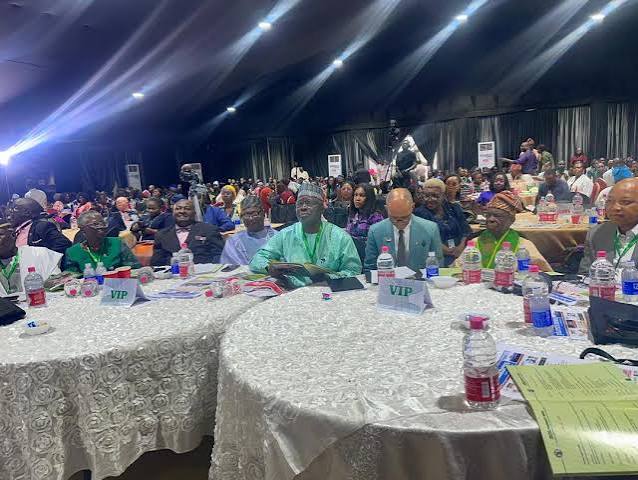
Chairman of PSN Lagos, Pharm. Olaitan Ogunlade, raised the concerns at the opening of the 2026 Pharmacy Week in Lagos.
Ogunlade said the shortage of pharmacists within the Directorate of Pharmaceutical Services (DPS) of the Lagos State Ministry of Health was affecting drug inspection, quality control, enforcement against counterfeit medicines and regulation of pharmaceutical practice.
“This is already creating gaps in drug control and weakening compliance structures across the health system,” he warned.
He urged the Lagos State Government to recruit more pharmacists and restore adequate professional manpower to critical regulatory positions.
Ogunlade also appealed to the Federal Ministry of Health and Social Welfare to inaugurate the PCN Governing Council in line with the Pharmacy Council of Nigeria Act 2022.
“We have been very patient even when we never solicited the amendment of the PCN Act 2022. In the last three years, full and lawful accreditation of training facilities, disciplinary measures and vital practice matters have suffered,” he said.
“The PSN, Lagos State, on behalf of pharmacists, calls on the FMOH to immediately inaugurate the PCN in alignment with the existing PCN Act,” Ogunlade added.
Meanwhile, Lagos State Commissioner for Health, Prof. Akin Abayomi, warned against unrestricted access to medicines, saying uncontrolled access to restricted drugs could have serious public health and environmental consequences.
“It shouldn’t be easy to access a restricted drug. It should be extremely difficult. We need to build a cage around restricted drugs for the benefit of us and for the benefit of the environment,” Abayomi said.
He said effective regulation must extend to hospitals, community pharmacies, laboratories and veterinary services, warning that antimicrobial residues, hormones, pesticides and other chemicals could eventually enter the human food chain through milk, eggs, fish and meat.
Abayomi also disclosed that more than half of Lagos residents could first seek healthcare from community pharmacies, patent and proprietary medicine vendors (PPMVs) and traditional medicine practitioners before visiting formal health facilities.
“More than 50%, almost 60%, will go to our PPMVs, our community pharmacies, our traditional medicine practitioners as the first point of call in a health-seeking encounter,” he said.
He described community pharmacies and PPMVs as important grassroots health resources that should be integrated into a stronger regulatory and referral framework.
“PPMVs do great work. They are custodians of health. They are right at the grassroots. They are on every street,” he said.
The commissioner proposed a regulated “hub-and-spoke” model through which community pharmacists could support PPMVs with training, referrals, medication guidance, pharmacovigilance and monitoring of product quality.
According to him, the arrangement could strengthen community-level screening and referral for malaria, hypertension, diabetes and tuberculosis.
Abayomi also cautioned against uncontrolled self-testing and self-medication as diagnostic technologies become increasingly accessible outside conventional laboratories.
“Point-of-care testing is something that needs careful understanding, accredited point-of-care gadgets, training and technical support,” he said.
He disclosed that the Lagos State Government was developing a point-of-care testing policy to ensure that diagnostic devices used within communities were assessed and accredited.
The commissioner further warned health professionals against practising beyond the limits of their training and licences.
“You can be a professional, a medical professional, and still practise quackery. The moment you start doing something that you have not been licensed to do by virtue of your training and licensing, then you are practising on dangerous territory,” he said.
Ogunlade said the PCN remained responsible for regulating pharmacy education, training, practice and pharmaceutical businesses, including accreditation, inspection, enforcement of standards and discipline of erring practitioners.
He called for a technically competent Governing Council comprising experienced pharmacists, academics, directors of pharmaceutical services and other relevant professionals, alongside representatives of the Federal Ministry of Health, PCN, NAFDAC and pharmacy technicians.
He also expressed concern over the proliferation of unregistered pharmaceutical premises, warning that weak oversight could expose Nigerians to practices below Good Pharmacy Practice standards.
The PSN chairman urged the government and relevant professional bodies to close existing regulatory gaps and strengthen pharmaceutical governance
© 2026, Standard Focus. All rights reserved. This material, and other digital content on this website, may not be reproduced, published, broadcast, rewritten or redistributed in whole or in part without prior express written permission from STANDARD FOCUS.