












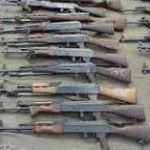





The Sea Empowerment & Research Center (SEREC) has urged the Federal Government to go beyond intercepting illegal firearms at Nigerian ports by tracing the entire supply chain and stopping weapons before they leave their countries of origin.
The call followed the recent interception of 204 firearms and firearm components concealed among declared household goods at the Tin Can Island Port in Lagos by the Nigeria Customs Service (NCS). The consignment originated from Turkey.
In its end-of-month advisory bulletin issued on August 31, 2026, SEREC commended the Tin Can Island Port Command for the intelligence-led operation but said the seizure should serve as a national security intelligence signal requiring a broader investigation.
The centre said the repeated discovery of Turkey-origin firearms warranted renewed source-country intelligence and closer cooperation between Nigerian and Turkish authorities.
It, however, clarified that its recommendation was not an accusation against the Turkish government, customs authorities or legitimate Turkish businesses.
According to SEREC, the latest seizure, coming weeks after firearm components intercepted at the same port led to the recovery of 399 pump-action rifles, should prompt authorities to revisit previous investigations into Turkey-linked arms trafficking.
“The present pattern makes it necessary to establish what became of those investigations, what intelligence was exchanged and what corrective measures resulted,” SEREC said.
The organisation called on the government to trace every stage of the supply chain, including the source, exporter, financier, consolidator, freight forwarder, shipping line, vessel, transit route, consignee and ultimate beneficiary.
SEREC also urged authorities to include shipping lines and maritime logistics operators in risk-based investigations, stressing that the recommendation was not an allegation against any particular carrier.
“Every major seizure should therefore become a network investigation, not simply a seizure report,” the organisation said.
It said the ultimate objective should be to identify and dismantle the criminal networks behind illegal arms shipments.
SEREC further called for a Turkey-Nigeria arms trafficking prevention and trade security mechanism involving customs, security, intelligence, financial and maritime authorities in both countries.
It also advocated the development of an AI-enabled shared trade-security intelligence system capable of connecting information on shippers, exporters, consignees, containers, vessels, countries of origin, transshipment points, declarations and previous seizures.
According to the organisation, such an interconnected system could enable authorities to identify patterns that may remain hidden when individual transactions are examined separately.
SEREC commended Comptroller-General of Customs, Bashir Adewale Adeniyi, and NCS management for their focus on intelligence-led enforcement, technology, risk management and inter-agency cooperation.
It also praised officers at Tin Can Island Port, Apapa, FOU, Ogun/Idiroko and Seme for their efforts against smuggling and illicit trade.
The centre called for improved intelligence, technology, funding, training, welfare and protection for frontline personnel.
It said success should ultimately be measured not by the number of firearms intercepted but by the number of trafficking networks disrupted.
“Catch the cargo — but pursue the chain. Stop the shipment — but secure the source. Deploy AI — but connect the intelligence. Commend the officers — but protect the protectors,” it said.
SEREC’s five-point advisory includes reopening and reviewing previous Turkey-linked arms investigations, establishing a source-country intelligence mechanism with Turkey, investigating the financial and logistics chains behind illegal consignments, deploying AI and shared intelligence to identify recurring cargo and routing patterns, and turning every major arms seizure into a network-disruption investigation.
2. IGP Disu, Air Chief strengthen police-air force partnership on joint operations
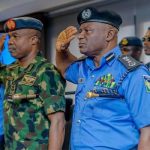
Inspector-General of Police, IGP Olatunji Rilwan Disu, has reaffirmed the commitment of the Nigeria Police Force to strengthening its partnership with the Nigerian Air Force through joint training, intelligence sharing, capacity building and coordinated operations.
Disu stated this when he received the Chief of the Air Staff, Air Marshal Kelvin Aneke, who paid a courtesy visit to the Force Headquarters in Abuja.
The meeting focused on deepening cooperation between the two security agencies in tackling Nigeria’s evolving security challenges.
The IGP stressed the importance of personnel welfare, effective command and control, and coordinated security planning, particularly ahead of major national events and the 2027 general elections.
He also highlighted the need to strengthen the protection of critical national infrastructure while improving logistics and operational response capabilities.
According to a statement by Force Public Relations Officer, CSP Aniete Iniedu, the IGP called for regular reviews of joint operations to improve their effectiveness.
The Chief of the Air Staff commended the longstanding professional relationship between the two institutions and acknowledged the support provided by the NPF Air Wing to the Nigerian Air Force.
He emphasised the need for sustained cooperation in joint operations, intelligence sharing and enhanced air support for police operations.
Discussions during the meeting covered aerial surveillance and reconnaissance, tactical deployment, medical evacuation, joint training and improved operational coordination in tackling terrorism, banditry, insurgency and other violent crimes.
The statement said, “The Nigeria Police Force remains committed to strengthening strategic partnerships with sister security agencies, enhancing inter-agency coordination and building a more integrated security response capable of effectively protecting lives, property and national assets across the country.”
3. Police arrest man over alleged ₦40m job scam involving more than 20 applicants
The Nigeria Police Force, Zone One Headquarters, Kano, has arrested a man identified as Ali Alhassan Mohammed, also known as Faragai, over allegations that he collected more than ₦40 million from job seekers under the guise of securing government appointments for them.
Mohammed was arrested by operatives of the Zonal Criminal Investigation Department (ZCID) following complaints from members of the public who allegedly paid him money to secure government employment.
The Zone One Police Public Relations Officer, DSP Abdullahi Hussaini, disclosed this on Wednesday.
According to him, preliminary investigations indicated that the suspect allegedly posed as a Special Assistant to the Kano State Universal Basic Education Board (SUBEB).
The police said Mohammed allegedly used the false identity to gain the confidence of job seekers before collecting money from them.
More than 10 victims have so far come forward during the investigation, while the suspect reportedly confessed to defrauding more than 20 people.
“He also admitted to producing and presenting fake appointment letters to some of them as evidence of purported appointments,” the police said.
Several of the alleged fake appointment letters have been recovered and retained as exhibits.
The suspect remains in police custody and is expected to be charged to court after the conclusion of investigations.
The Zone One Police Headquarters urged members of the public to be wary of individuals demanding money in exchange for government jobs or appointments.
It also advised job seekers to verify employment offers through appropriate government channels before making any payment.
4. Pensioners’ tear-gassing: Lagos CSOs demand independent probe, accuse police of cover-up
A coalition of nine Civil Society Organisations (CSOs) in Lagos has condemned the alleged tear-gassing of pensioners protesting unpaid entitlements at the Lagos State House of Assembly and demanded an independent investigation into the incident.
The groups also accused the Lagos State Police Command of attempting to cover up the alleged assault following its denial that the elderly protesters were tear-gassed.
The coalition comprises Corporate Accountability and Public Participation Africa (CAPPA), #EndBadGovernance Movement, Lagos State, Precision, Electrical and Related Equipment Senior Staff Association (PERESSA), Committee for the Defence of Human Rights (CDHR), Lagos State, Joint Action Front (JAF), Campaign for Democratic and Workers Rights (CDWR), Rule of Law and Accountability Advocacy Centre (RULAAC), and Centre for Human & Socio-economic Rights (CHSR).
The organisations described the reported action against the pensioners as “cruel, unacceptable, disgraceful, and an indefensible abuse of state power.”
The pensioners, including members of the Nigeria Union of Pensioners (NUP) and retirees under the Contributory Pension Scheme (CPS), gathered at the Lagos State House of Assembly on August 31, 2026, following the expiration of a 19-day ultimatum over unpaid pension increases, wage awards and arrears.
In a joint statement, the CSOs said, “We, the coalition of Civil Society Organisations (CSOs) in Lagos, strongly condemn the reported teargassing of peaceful pensioners demanding their unpaid entitlements and the Lagos State Police Command’s subsequent denial.”
“We hereby demand an independent investigation into the assault and alleged attempts to conceal what happened.”
The groups said the pensioners were citizens who had spent decades working and contributing to society and should not have been subjected to force while demanding their lawful entitlements.
“Even more disturbing is the reported denial by the Lagos State Police Public Relations Officer, PRO, SP Abimbola Adebisi, that the pensioners were teargassed,” the statement said.
The CSOs argued that eyewitness accounts, including that of a pensioners’ leader, pointed to the use of tear gas and that the appropriate response should have been an apology and transparent investigation.
“If the Police Command cannot acknowledge misconduct involving its own officers, how can ordinary citizens trust it to protect them?” they asked.
The organisations also called on the Police Service Commission to examine the conduct of the police spokesperson, saying any deliberate misrepresentation or concealment of facts should attract appropriate action.
They questioned why force was allegedly used against elderly protesters and asked, “What threat did these pensioners pose? Were they armed? Were they violent?”
The groups said several eyewitnesses, including Deputy Chairman of the Nigerian Pensioners Practitioners of Lagos State, Latif Salau, had narrated their experiences.
According to Salau, a senior police officer later apologised following the incident and provided the pensioners with sachet water and biscuits.
The CSOs asked, “If the teargassing did not occur, as the police claim, why would an officer apologise to the protesters afterwards?”
They also cited reports that the Chief of Staff to the Lagos State Governor, Tayo Ayinde, apologised for the incident and absolved the state government of responsibility.
The groups expressed concern over what they described as repeated repression of peaceful protests in Lagos.
They recalled the January 28, 2026 protest by residents against alleged illegal demolitions and forced evictions, which they said was met with a police crackdown.
The organisations called on the Inspector-General of Police to establish an internal mechanism to review the operations of the Lagos State Police Command.
They also demanded retraining of officers on the rights of peaceful protesters, proportionality, de-escalation and the appropriate use of force.
The CSOs further called for disciplinary action against officers found to have authorised or used unlawful force against peaceful protesters.
They urged the media to resist intimidation and stand by credible reports of the incident.
On the pension dispute, the groups said retirees under the Defined Benefit Scheme were demanding 57 months of arrears from the 2019 consequential adjustment, 12 months of arrears from the 20 and 28 per cent increases approved in 2024, as well as the N32,000 wage award effective from January 2024.
Under the Contributory Pension Scheme, they said retirees were demanding unpaid increases dating back to 2010, subsequent adjustments and the N32,000 wage award.
The organisations also questioned why pension obligations remained unmet despite increased federal allocations to Lagos State.
They called on Governor Babajide Sanwo-Olu to meet directly with the pensioners, condemn any police assault, pay undisputed arrears and publish a clear timetable for settling outstanding claims.
“We remind the Lagos State Government and the Nigeria Police Force that Sections 39 and 40 of the Constitution protect freedom of expression and peaceful assembly, while Section 210 provides constitutional protection for pension rights,” the groups said.
“They must not be intimidated, humiliated or silenced for doing so. This has become one too many. We demand accountability, justice, and above all, that Nigeria’s elderly citizens be treated with the dignity they have earned.”
5. Army rescues retired general’s wife from kidnappers in Abuja, arrests two suspects
The Nigerian Army has rescued Mrs Adonkie, wife of retired Brigadier General Basil Adonkie, after she was abducted from her residence in Abuja on September 1, 2026.
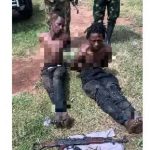
The rescue operation also led to the arrest of two suspected members of the kidnapping syndicate and the recovery of an AK-47 rifle, magazine and 19 rounds of ammunition.
According to the Army, troops of the Guards Brigade and Army Headquarters Garrison immediately launched a coordinated pursuit operation after the abduction.
The troops covered multiple suspected escape routes in an effort to locate the victim and apprehend her abductors.
“Acting on credible intelligence, the troops advanced through the Aco Estate–Goza Community axis and established contact with the kidnappers,” the Army said.
It added that the criminals, overwhelmed by the troops’ rapid response and superior firepower, abandoned the victim and fled into nearby bushes.
Mrs Adonkie was subsequently rescued at Angwan Sabo Village.
The troops intensified the pursuit along the Aco Estate–Angwan Sayawa axis while additional personnel were deployed to block possible escape routes.
In a follow-up operation on September 2, troops intercepted two fleeing members of the kidnapping syndicate near Gaube Village in Kuje Area Council of the Federal Capital Territory.
The Army said one AK-47 rifle, one AK-47 magazine and 19 rounds of 7.62mm Special ammunition were recovered.
“Alongside the two suspected kidnappers troops also recovered one AK-47 rifle, one AK-47 magazine and 19 rounds of 7.62mm Special ammunition,” the statement said.
The troops have continued clearance and tracking operations in the area in an effort to apprehend other members of the syndicate.
The Nigerian Army commended residents for their vigilance and cooperation and reassured the public of its commitment to protecting lives and property.
6. 2027: INEC awaits full budget release to replace damaged BVAS, test IReV
The Independent National Electoral Commission (INEC) has said it is awaiting the full release of a substantial portion of its proposed budget for the 2027 general elections as it prepares to replace damaged and lost Bimodal Voter Accreditation System (BVAS) devices.
The commission also disclosed plans to conduct a mock presidential election to test the functionality of BVAS and the INEC Result Viewing Portal (IReV) under conditions similar to election day.
INEC Chairman, Prof. Joash Amupitan, made this known at the 13th Annual International Conference of the Association of Communication Scholars and Professionals of Nigeria (ACSPN) in Abuja.
He was represented at the event by National Commissioner, Sani Adam.
Speaking on the theme, “Media, Technology and Elections in Africa: Navigating Digital Disruption and the New Dynamics of Electoral Communication,” Amupitan said the proposed budget contained significant allocations for election technology and operations.
He said the allocation included funds for new accreditation devices to replace those lost or damaged during the last electoral cycle.
While the full release of the funds was still pending, the chairman said INEC’s ICT team had already begun engagements with manufacturers on procurement.
He added that preparations for a technology audit and the proposed mock election were progressing alongside budget finalisation.
Amupitan disclosed that INEC was conducting a comprehensive audit of its electoral technology systems, including system redundancy, penetration testing and disaster recovery planning.
The commission is also exploring a mock presidential election ahead of 2027 to test voter accreditation, result transmission and result viewing under conditions similar to the actual election.
The INEC chairman called for electoral technology and communication to be treated as an integrated discipline, warning that AI-driven disinformation could pose a major threat to the credibility of the 2027 elections.
He said the credibility of the commission depended not only on the integrity of ballots, BVAS and result sheets but also on how well citizens understood and trusted the electoral process.
Amupitan said the deployment of BVAS and IReV was designed to address longstanding credibility concerns by allowing citizens to view polling-unit results before they could be altered during collation.
He acknowledged, however, that the 2023 elections demonstrated how technology could become a source of public distrust when it failed to perform as expected.
According to him, legitimacy is earned when electoral systems perform reliably, are properly understood and when shortcomings are explained honestly.
The INEC chairman also warned about the growing threat posed by synthetic and fabricated content generated through artificial intelligence.
He said manipulated videos, audio and images could reach millions of social media users before verification was possible.
He identified algorithmic microtargeting as another concern because it allows different messages to be directed at specific segments of the electorate without a common factual foundation.
Amupitan outlined a five-point approach that includes integrating technology and communication planning, establishing a rapid-response mechanism to counter falsehoods within the same news cycle, proactively communicating known vulnerabilities and safeguards, deepening collaboration with media scholars, fact-checkers and technology platforms, and investing continuously in public media literacy.
He also called for greater collaboration between INEC and communication scholars on media literacy research, synthetic-content detection and training for journalists and civic educators.
The INEC chairman observed that the 2027 electorate would be younger and more reliant on mobile technology than previous electorates.
He described the smartphone as the primary window through which many voters would experience the election.
He cautioned that solutions adopted from other countries must be adapted to Nigeria’s realities, including internet access, language diversity and institutional trust.
Amupitan stressed that INEC’s response to disinformation would be to provide better and faster information rather than restrict legitimate journalism or civic dissent.
7. NAFDAC orders recall of sachet alcohol, products below 200ml
The National Agency for Food and Drug Administration and Control (NAFDAC) has ordered manufacturers to recall alcoholic beverages packaged in sachets and containers below 200ml as the Federal Government intensifies enforcement of regulations aimed at reducing alcohol-related harm.
NAFDAC directed manufacturers to conduct a proper inventory of the affected products and destroy them under the agency’s supervision.
The manufacturers are expected to bear the cost of the exercise.
The agency said the recall was part of efforts to remove prohibited small-volume alcoholic drinks from the market and reduce their accessibility, particularly among young people.
The ban on the production, importation, distribution and sale of alcoholic beverages packaged in sachets and containers below 200ml took effect on January 1, 2026, after the expiration of the transition period granted to manufacturers.
NAFDAC warned manufacturers, distributors and other businesses that violate the directive that they could face regulatory sanctions.
The latest enforcement follows the Federal Government’s launch of the Nigeria Alcohol Policy and its Multisectoral Implementation Plan 2026–2030 in Abuja.
The policy, launched by the Federal Ministry of Health and Social Welfare, provides a national framework for addressing harmful alcohol use and regulating the production, distribution, marketing and consumption of alcoholic beverages.
Coordinating Minister of Health and Social Welfare, Prof. Muhammad Ali Pate, represented by the ministry’s Permanent Secretary, Daju Kachollom, said harmful alcohol use and the circulation of illicit and unregulated alcohol products remained major public health concerns.
Pate stressed the need for collaboration among government agencies, the alcohol industry, civil society organisations and other stakeholders to ensure effective implementation of the policy.
He said reducing alcohol-related harm required coordinated action beyond the health sector because of its links to various health and social challenges.
The Federal Government said implementing the new policy alongside stronger enforcement of existing regulations would promote responsible alcohol consumption, reduce alcohol-related harm and protect the health and wellbeing of Nigerians.
8. Diphtheria outbreak: Nasarawa confirms 15 cases, records no deaths
The Nasarawa State Ministry of Health has confirmed 15 cases of diphtheria amid an ongoing outbreak, with the majority of the cases recorded in Keffi Local Government Area.
Director of Public Health in the state Ministry of Health, Dr Attah Peter, disclosed this during an interview in Lafia, the state capital.
Attah said the confirmed cases were recorded across three local government areas and involved patients aged between two months and 11 years.
“At the moment, we have recorded and confirmed cases of 15. The age group ranges between 2 months to 11 years,” he said.
He explained that 11 of the 15 cases were from Keffi, while one was recorded in Wamba and three in Lafia.
The director attributed most of the infections to lack of immunisation among affected children.
“You begin to wonder why an 11-year-old is coming down with diphtheria at this age. 11 years ago, that caregiver should have taken this child for vaccination. That was not done, and so the child, even at this age, is still vulnerable,” Attah said.
He noted that similar cases had been recorded in other states, including Kano, where adults as old as 50 had reportedly been affected due to lack of vaccination.
According to him, unlike the previous year when the state recorded fatalities, no death has been recorded from the outbreak this year.
“For all the cases that actually presented themselves in the facility, none we’ve not recorded any death. Maybe because of the clinician’s high index of suspicion and then the commencement of treatment early enough,” he said.
Attah said vaccines and treatment had been deployed to the Federal Medical Centre, Keffi, Federal University Teaching Hospital, Lafia, and other health facilities managing the cases.
He urged parents and caregivers to take advantage of free routine immunisation available at Primary Healthcare Centres across the state.
“The routine immunization is free. It’s just for you to make effort to take this child to where these vaccines are available. They are readily accessible to almost every primary healthcare facility,” he said.
He explained that children are expected to receive routine vaccines from birth through 18 months, including booster doses.
He also advised girls aged between nine and 11 years to receive the HPV vaccine to help prevent cervical cancer.
Diphtheria is a highly contagious bacterial infection that affects the throat and can cause breathing difficulties, heart failure and death if not treated promptly.
Residents were advised to seek immediate medical attention if they develop symptoms such as sore throat, fever or a thick grey coating in the throat.
9. Sokoto commissions N5.6bn bridge, rural road to boost agriculture, connectivity
The Sokoto State Government has commissioned two major infrastructure projects valued at N5.6 billion in Silame Local Government Area as part of efforts to improve rural connectivity and stimulate economic activities.
The projects comprise the N2.4 billion Silame Bridge and the 9.4-kilometre Garin Magaji-Gittarana rural road.
Nasarawa State Governor, Abdullahi Sule, commissioned the projects during activities marking the third anniversary of the administration of Sokoto State Governor, Ahmed Aliyu.
The projects are expected to improve the movement of agricultural produce, reduce post-harvest losses and connect rural communities to larger markets.
Speaking at the commissioning ceremony, Sule commended the Sokoto Government for making rural infrastructure a priority.
He said functional roads and bridges were essential to economic growth and improved living conditions.
“I can see smiles on the faces of all the good people who are here, as well as all the beneficiaries. I am also aware of the numerous township and rural roads that you have executed,” Sule said.
He said the infrastructure would improve the movement of people and farm produce while providing better access to schools, healthcare centres and commercial areas.
According to him, the projects would also stimulate trade, create employment and strengthen the productive capacity of Silame, where farming and livestock production are major sources of livelihood.
Sule urged the Sokoto Government to maintain the pace of road construction and called for greater cooperation among northern governors to address the region’s infrastructure and socio-economic challenges.
He also urged residents to protect public infrastructure from vandalism and destruction.
“Government projects should no longer be regarded as nobody’s property. Let us all develop the culture of protecting public infrastructure because it is meant for our common good,” he said.
Governor Ahmed Aliyu said the projects demonstrated his administration’s commitment to transforming rural communities and expanding economic opportunities beyond urban centres.
He explained that the Silame Bridge was constructed at a cost of N2.4 billion and comprised two six-cell box culverts, a retaining wall and asphalt overlay extending from the Silame Police Station to the bridge.
Aliyu said the bridge was strategically important to residents of Silame, Wamakko, Bodinga and Kware local government areas because of the high level of agricultural and commercial activities in the area.
He said the project would also improve connectivity between Sokoto and neighbouring Kebbi State and complement the Federal Government’s Illela-Badagry Superhighway.
On the 9.4-kilometre Garin Magaji-Gittarana road, the governor said the project was executed in partnership with the Rural Access and Agricultural Marketing Project (RAAMP).
He said the road was designed to connect farming communities with markets and essential services.
According to Aliyu, the road would facilitate the evacuation of farm produce, reduce travel time, improve road safety and make movement easier for students, patients, traders and other residents.
He listed other rural roads executed by his administration to include Buzallega, Lukuwa, Yar Gaga-Malakawa Shellar, Kakatuku-Dandamu, Unguwar Midaji-Kaurare-Gwagwar Yaya-Gwagwar Dikko and Gande-Mali-Gwahitto-Fakko.
The governor said more projects had also been awarded and were either completed, commissioned or at various stages of construction.
Aliyu commended the Ministry of Works, contractors and other stakeholders for their contributions to the projects.
He also warned residents and road users against damaging public infrastructure, stressing that the projects were funded with taxpayers’ money.
The governor commended President Bola Ahmed Tinubu for creating what he described as a conducive fiscal environment that had enabled states to undertake development projects.
Deputy Governor and Supervising Commissioner for Works, Engineer Idris Muhammad Gobir, said the projects demonstrated the administration’s commitment to using infrastructure as a catalyst for socio-economic transformation.
He assured residents that the Ministry of Works would continue to enforce quality standards to ensure durability and value for public money.
10. Troops neutralise suspected bandit, recover weapons in Benue
Troops of Operation Whirl Stroke (OPWS) have neutralised a suspected bandit and recovered weapons, ammunition and other items during a fighting patrol along the Gbise–Igyudu Road in Katsina-Ala Local Government Area of Benue State.
Acting Media Information Officer of OPWS, Lieutenant Ahmad Zubairu, disclosed this in a statement on Thursday.
He said troops of Sector 1 encountered two suspected bandits riding a motorcycle during a routine fighting patrol on September 2, 2026.
“After a positive identification of the armed suspects, troops immediately engaged the suspects resulting in a fierce exchange of fire,” he said.
According to him, one of the suspects was neutralised during the encounter while the second fled after being overwhelmed by the troops’ superior firepower.
The troops subsequently conducted a search and clearance operation around the area to ensure that the fleeing suspect did not pose an immediate threat to nearby communities.
Items recovered included one pistol, one pistol magazine, one AK-47 magazine, eight rounds of 7.62mm Special ammunition, one 7.62mm NATO round, two 9mm rounds and one PKT round.
The troops also recovered a Tecno mobile phone and assorted charms from the scene.
OPWS urged residents to remain vigilant and continue providing timely and credible information about suspected criminals and their movements.
The operation said such information remained essential to ensuring swift responses to emerging security threats.
“Operation Whirl Stroke will continue to dominate its operational areas through sustained patrols and other intelligence-driven operations aimed at dismantling criminal networks and denying them the opportunity to threaten the peace and security of law-abiding citizens,” it said.
11. Rivers NDC confirms deputy gov candidate’s name uploaded on INEC portal
The Nigerian Democratic Congress (NDC), Rivers State chapter, has dismissed reports that the name of its Deputy Governorship Candidate, Dr Mike Barieenee Nwielaghi, was not uploaded on the Independent National Electoral Commission (INEC) portal.
The party’s media directorate, in a statement issued in Port Harcourt on Thursday, described the report as false and misleading.
“We state unequivocally that this narrative is false and misleading. The name of our deputy governorship candidate was successfully uploaded by INEC,” the party said.
The NDC said Nwielaghi remained its duly presented and recognised Deputy Governorship Candidate for Rivers State and that his details had been submitted through the appropriate electoral process.
“Dr. Mike Nwielaghi remains the duly presented and recognised Deputy Governorship Candidate of the Nigeria Democratic Congress in Rivers State, and his details have been duly submitted through the appropriate electoral process,” it said.
The party urged members of the public, its supporters and the media to disregard reports suggesting otherwise.
“Political discourse should be guided by facts, not speculation, misinformation or attempts to create unnecessary confusion within the electorate,” the statement said.
The NDC said it remained committed to transparency, due process and issue-based political engagement.
It also urged journalists and members of the public to verify electoral information from official sources before publishing or sharing claims capable of misleading voters.
“The facts remain clear. Dr. Mike Nwielaghi is the NDC Deputy Governorship Candidate for Rivers State,” the party said.
Nwielaghi, while confirming the uploading of his name by INEC, said the party was prepared to win the forthcoming election and provide what he described as the best democratic leadership for the people of Rivers State.
He also described the party’s governorship candidate, Chief Dumo Lulu Briggs, as a politician loved by the people of the state.
12. Troops rescue six kidnapped victims in Kebbi, repel terrorists
Troops of Sector 2, Operation Fansan Yamma, have rescued six kidnapped victims following an operation against suspected terrorists in Wasagu Local Government Area of Kebbi State.
The victims were rescued on September 2, 2026, after troops received credible intelligence about terrorist activity around Mehinua Village along the Wasagu-Ayu Road.
Media Information Officer of the operation, Lieutenant Colonel Aliyu Danja, disclosed this in a statement.
According to him, troops swiftly mobilised to the area after receiving the intelligence and made contact with the terrorists.
“Acting on the intelligence, troops swiftly mobilized to the scene, where they made contact with the terrorists and engaged them with high volume of fire,” he said.
The military said the troops’ intervention forced the terrorists to flee, abandoning the kidnapped victims.
“Troops’ prompt intervention forced the terrorists to flee and abandon their victims,” the statement said.
The six victims were subsequently rescued unharmed.
The rescued persons and the vehicle involved were handed over to relevant community authorities for further necessary action.
The military said the operation demonstrated the determination of Operation Fansan Yamma to protect the lives and property of law-abiding citizens across its area of responsibility.
“Operation Fansan Yamma appreciates the general public for its continuous support and urges them to remain vigilant and report suspicious activities within their localities to the nearest security outpost for prompt action,” it said.
© 2026, Standard Focus. All rights reserved. This material, and other digital content on this website, may not be reproduced, published, broadcast, rewritten or redistributed in whole or in part without prior express written permission from STANDARD FOCUS.