




































By Clement John
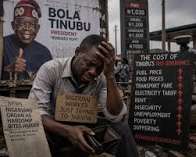
Nigerian workers marked this year’s May Day amid deepening hardship, with organised labour warning that worsening insecurity, poverty, and inflation are eroding livelihoods and undermining the dignity of work.
Across industries from agriculture and manufacturing to offices and the informal sector workers expressed frustration over rising living costs and shrinking purchasing power.
Many said the hope for improved welfare remains elusive as wages struggle to keep pace with soaring food prices, transport fares, and energy costs, while concerns over safety and job security persist.
Labour leaders echoed these sentiments, describing a system where economic reforms have yet to deliver tangible benefits to citizens. They cautioned that without urgent measures to stabilise prices, secure communities, and safeguard jobs, conditions for workers could deteriorate further.
President of the Nigeria Labour Congress (NLC), Joe Ajaero, decried the combined impact of insecurity, poverty, inflation, and currency devaluation, noting that they have inflicted widespread hardship.
He warned that failure to address insecurity and poverty would worsen unemployment and accelerate the decline of decent jobs, stressing that about 90 per cent of Nigeria’s workforce operates within the informal sector without adequate protection, pensions, or fair conditions.
“If insecurity is addressed, farmers will return to their fields, food production will rise, and employment opportunities will expand,” he said, adding that the disappearance of decent jobs is deepening inequality.
Also speaking, Acting General Secretary of the National Union of Electricity Employees (NUEE), Dominic Igwebike, said the 2026 May Day theme, “Insecurity, Poverty – Bane of Decent Work,” reflects the harsh realities faced by workers.
He highlighted challenges in the power sector, including arbitrary dismissals, stagnant wages, unsafe work environments, and increasing insecurity.
According to him, electricity workers face threats ranging from
kidnappings to physical assaults while carrying out their duties.
“Insecurity has cast a long shadow over workplaces. Transmission lines are vandalised, substations attacked, and workers exposed to life-threatening risks. No one should have to choose between earning a living and staying alive,” he said.
Igwebike added that rising inflation and the high cost of living have significantly diminished the value of workers’ earnings, making it difficult for many to meet basic needs.
Earlier, at a pre-May Day lecture organised by the NLC and the Trade Union Congress (TUC), development expert Dr. Toyin Kunle Olawunmi warned that Nigeria risks a broader crisis if poverty and insecurity are not urgently tackled.
Delivering a keynote address titled “Insecurity, Poverty: Bane of Decent Work,” Olawunmi described the situation as a governance challenge requiring coordinated and measurable policy responses.
He argued that insecurity and poverty are now deeply interconnected, noting that economic activities suffer when farmers cannot access their land, traders cannot move goods safely, and workers avoid volatile areas.
“Nigeria cannot build decent work on fearful communities, hungry households, and weak institutions,” he said.
Olawunmi further urged government to treat poverty as a national security emergency, warning that widespread deprivation could fuel crime, unrest, and political instability if left unchecked.
He criticised the gap between policy formulation and real-life impact, stressing that reforms must translate into improved living conditions for citizens.
“The citizen does not eat policy grammar. Nigerians cannot survive on policy statements alone,” he said.
He called for a wage system that reflects actual living costs, alongside stronger social protection measures, improved local governance, and support for the informal sector.
Olawunmi also urged authorities to secure critical sectors such as agriculture, markets, schools, transport networks, and energy infrastructure, describing them as vital to national stability.
He challenged organised labour to broaden its advocacy to include informal workers and vulnerable groups, while calling on employers to uphold fair labour standards and treat workers as partners in productivity.
He concluded that Nigeria’s stability depends on restoring dignity to labour and rebuilding public trust.
“Nigeria will not be secure until citizens can earn a decent living through honest work. Those who work for the country deserve a system that works for them,” he said.
The lecture formed part of activities leading up to the May Day celebration, held against the backdrop of mounting economic pressure and rising insecurity nationwide.
© 2026, Standard Focus. All rights reserved. This material, and other digital content on this website, may not be reproduced, published, broadcast, rewritten or redistributed in whole or in part without prior express written permission from STANDARD FOCUS.