






























The Deputy Secretary-General of the United Nations, Amina Mohammed, has called for intensified peacebuilding efforts, inclusive development, and stronger collaboration between global institutions and subnational governments during her visit to Benue State.
Speaking at the Government House in Makurdi on Friday, Mohammed described Benue as critical to Nigeria’s food security, economic strength, and social stability, while commending the resilience of its people amid growing challenges.
“I am pleased to be here in Benue and to see first-hand the priorities of the state and the resilience and beauty of its people,” she said.
She began by expressing condolences to families affected by recent attacks in communities including Mbalom in Gwer East Local Government Area and Yelewata in Guma LGA, extending solidarity to those displaced by the violence.
Mohammed noted that the situation in Benue mirrors wider global pressures such as conflict, climate shocks, and economic strain, warning that these forces are increasingly converging to test vulnerable communities.
“In Nigeria and in Benue in particular, these pressures are felt in immediate ways, shaping how communities pursue peace, recovery, and resilience,” she stated.
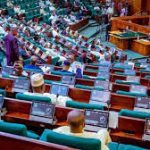
Despite the challenges, the UN Deputy Chief praised the policy direction of the state government, highlighting its 2026 budget focused on rural development and growth, as well as innovations such as Nigeria’s first fully digital e-Parliament system.
She stressed that Benue’s position as Nigeria’s “food basket” makes it central to national prosperity, urging sustained investment in agriculture, livelihoods, and value chains.
“Benue holds enormous potential, not only in feeding the country, but in generating livelihoods and broader prosperity,” she added.
On insecurity, Mohammed emphasized that military responses alone are insufficient, calling instead for grassroots peacebuilding, justice, and reconciliation.
“What is required is not only a security response, but a broader commitment to peacebuilding that rebuilds trust across communities,” she said.
She also underscored the importance of education, particularly for children affected by conflict and displacement, describing it as vital for long-term peace and recovery. She commended the state’s BRACE-UP initiative aimed at returning out-of-school children to classrooms.
Earlier, Mohammed visited Yelewata community in Guma LGA, where she expressed solidarity with victims, especially women and children, urging unity and social cohesion.
“We must return to our shared unity as Nigerians, rich in diversity. It is not impossible,” she said, adding that peace is essential for agricultural recovery and national growth.
At the Mega Internally Displaced Persons (IDP) camp in Mbayongo along the Makurdi-Gbajimba Road, she encouraged children to remain committed to education.
“Education is what no one can take from you; it will transform your lives,” she told them, expressing optimism that displaced persons would soon return home.
Mohammed assured that the United Nations would continue to support Benue in advancing peace, resilience, and sustainable development.
“The United Nations stands in solidarity with Benue State for a more peaceful and resilient future,” she said.
In his remarks, Governor Hyacinth Alia described the state as a key hub for food security in Nigeria and West Africa but lamented the impact of insecurity, revealing that over 500,000 people are currently internally displaced.
“Benue stands today at the intersection of global priorities food security, climate resilience, and human dignity,” he said.
The governor highlighted achievements of his administration, including the rehabilitation of over 375 public schools, recruitment of 9,700 teachers, improved healthcare services, and investments in infrastructure and agriculture.
He also outlined measures to support displaced persons, including housing, access to farmland, and livelihood restoration programmes.
“These are not just interventions; they are pathways from displacement to dignity,” he noted.
Governor Alia called for deeper collaboration with the UN in areas such as climate resilience, agro-industrial development, and community security.
“What we seek is not charity, but collaboration not temporary relief, but lasting transformation,” he added.
© 2026, Standard Focus. All rights reserved. This material, and other digital content on this website, may not be reproduced, published, broadcast, rewritten or redistributed in whole or in part without prior express written permission from STANDARD FOCUS.