




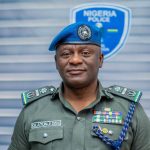









The National Police Council, on Monday, confirmed Olatunji Disu as the substantive Inspector-General of Police, IGP.
The confirmation took place at the Police Council meeting presided over by President Bola Tinubu at the Council Chamber, Presidential Villa, ABUJA.
The closed-door session, was convened to affirm Disu’s nomination following the resignation of former Inspector-General of Police, Kayode Egbetokun.
Disu was appointed last week in acting capacity and was decorated with the IGP rank. He was an Assistant Inspector-General of Police, AIG, before his elevation and has about two months to retire.
Sources had indicated that upon the Council’s endorsement, the President will transmit the appointment to the Senate for confirmation in line with constitutional and statutory provisions.
But there is a school of thought that has said that the appointment of the IGP does not require Senate confirmation.
Among those that attended the high-level meeting were Vice President Kashim Shettima; Secretary to the Government of the Federation, George Akume; National Security Adviser, Nuhu Ribadu; Minister of Police Affairs, Ibrahim Gaidam; and Minister of the Federal Capital Territory, Nyesom Wike, many state Governor s, alongside other statutory members of the Council.
The Nigeria Police Council is chaired by the President and comprises the governors of the 36 states of the federation, the Chairman of the Police Service Commission, and the Inspector-General of Police.
Established as a critical advisory organ under the Police Act 2020, the Council plays a strategic oversight role on key policing matters.
Its responsibilities include advising the President on internal security policy, police administration, budgeting, and senior appointments and promotions within the Force.
While it does not interfere in the day-to-day operational activities of the police, the Council ensures that due process is followed in major institutional decisions, particularly appointments to the office of the Inspector-General of Police.
Monday’s meeting comes at a time when Nigeria continues to grapple with multifaceted security challenges, underscoring the importance of stable leadership at the helm of the nation’s policing architecture.
© 2026, Standard Focus. All rights reserved. This material, and other digital content on this website, may not be reproduced, published, broadcast, rewritten or redistributed in whole or in part without prior express written permission from STANDARD FOCUS.