








































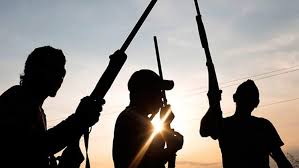
On Sunday, January 18, 2026, a remote community in Kurmin Wali, Kajuru Local Government Area of Kaduna State was plunged into fear and anguish as gunmen stormed three churches during morning services. By the end of the day, scores of worshippers reportedly between 160 and 177 had been abducted in what is now one of the most disturbing episodes of insecurity in recent memory.
The initial shock came not only from the harrowing nature of the attack entire families, children and elders taken from places of worship but from the response that followed. In an almost surreal twist, state security officials and local government leaders publicly denied that any abductions had occurred. These denials were issued even as community members, religious leaders, and human rights groups insisted that the kidnappings were real and unfolding.
Only after widespread criticism and mounting evidence did the Nigeria Police Force concede that an abduction had indeed taken place. This reversal from denial to reluctant confirmation raises a central question: why would state actors attempt to obscure the truth of a mass kidnapping?
Denial Erodes Public Trust
Government communications matter. In moments of crisis, accurate information can save lives and guide collective action. What we witnessed instead was confusion: Residents and local lawmakers reported dozens of worshippers missing.
Police and local government officials dismissed those claims as “falsehoods spread by conflict entrepreneurs.”
Only after pressure from religious organizations and civil society did authorities acknowledge the abductions.
This sequence of denial and reversal damages public confidence in security institutions. If citizens feel officials are more concerned with managing narratives than securing communities, a dangerous gulf forms between the state and the people it is meant to protect.
Politicisation vs. Protection
Compounding the tragedy is the politicisation of insecurity.
Opposition voices, notably the Peoples Democratic Party, have accused the state police and local government chair of deliberately “obscuring the truth” and demanded public apologies and urgent federal intervention.
Meanwhile, security analysts caution that turning every kidnapping into a point-scoring exercise risks further endangering the very victims whose release should be the immediate priority.
Both criticisms and cautions are valid but they share a common root: a desperate need for meaningful action and leadership. When political blame trumps coordinated rescue efforts, the abducted and their families pay the price.
The Human Cost
Behind the politics and press statements are real Nigerians, men and women whose names have since been released, many of whom remain in captivity. Entire communities have fled, terrified that more attacks could come. Southern Kaduna Christian leaders have organised fasting and prayer vigils, not as a substitute for security, but as a cry for mercy in the face of profound vulnerability.
Lessons for Governance and Security
The Kaduna incident exposes systemic weaknesses in how the state handles insecurity:
Communication must be transparent and rooted in facts. Denying obvious events only deepens mistrust and delays effective response.
Security strategies must prioritise the safety of civilians over image management.
The recurring kidnapping of schoolchildren, churchgoers, and villagers across northern Nigeria reflects a security apparatus still struggling to protect its citizens.
Accountability matters. Communities and civil society must be able to question authorities without being dismissed as misinformation peddlers.
A Plea for Action
This is no ordinary controversy. It is a human tragedy that demands urgent, sustained action not only to rescue the abducted but to restore confidence in the institutions entrusted with public safety.
As Nigeria grapples with persistent insecurity, the Kaduna kidnapping should be a watershed moment one that compels a shift from denial and defensiveness to accountability, transparency, and decisive protection of citizens.
The test of leadership now is clear: will our government answer with honesty and resolve, or will words continue to fail where lives hang in the balance?
If you’d like, I can tailor this editorial further for publication specifics like tone, word count, or audience engagement strategies.
© 2026, Standard Focus. All rights reserved. This material, and other digital content on this website, may not be reproduced, published, broadcast, rewritten or redistributed in whole or in part without prior express written permission from STANDARD FOCUS.