






























When the Classroom Becomes a Killing Field
By Standard Focus
The abduction of dozens of children and teachers in Oyo State, and the brutal murder of one of their number, demands more than condolences. It demands a reckoning.
The images were too grotesque to ignore and too painful to watch. A teacher a man who had dedicated his life to shaping young minds bound, humiliated, and beheaded by terrorists who invaded his school in broad daylight. His name was Michael Oyedokun. He was not a soldier. He was not a politician. He was an educator, a public servant in the truest sense, who showed up to work on an ordinary Thursday morning at Community High School, Ahoro-Esinele, in Oriire Local Government Area of Oyo State, and never came home.
His death, and the abduction of 45 others 39 of them children, the youngest a two-year-old girl named Christianah Akanbi represent one of the most chilling security failures in recent Nigerian history. It is a moment that should shake every Nigerian, from the corridors of Aso Rock to the most remote village in the country. And yet, if history is any guide, the outrage will fade, the press statements will dry up, and the next massacre will arrive before the last one is resolved.
We refuse to let that happen without speaking plainly.
A Nation That Has Normalised the Abnormal
There was a time when the abduction of schoolchildren would have brought Nigeria to a standstill. The 2014 Chibok abductions provoked global outrage, spawned an international campaign, and forced the issue of school security onto the world stage. More than a decade later, mass abductions of pupils have become so frequent that they barely interrupt the national news cycle for more than 48 hours.
This is not a coincidence. It is the consequence of a systemic failure to hold anyone accountable, to prosecute anyone meaningfully, or to fundamentally restructure how Nigeria protects its most vulnerable citizens. The bandits, terrorists, and kidnappers who struck in Oriire did so not in spite of the Nigerian state but, in a very real sense, because of it — because years of impunity have taught them that Nigerian children are easy targets and that the Nigerian government’s response will be predictable, performative, and ultimately ineffective.
Twelve armed men on motorcycles descended on two schools in the same local government area simultaneously. They abducted 46 people, killed a teacher on camera, seized motorcycles from villagers, and melted into the forest. The fact that such an operation could be executed in broad daylight, in a coordinated fashion, without prior intelligence detection or immediate armed response, tells us everything we need to know about the state of Nigeria’s rural security infrastructure.
The Children Left Behind
Before this becomes an abstraction, a policy debate, or a political football, let us sit with the human reality of what has happened.
Christianah Akanbi is two years old. She cannot yet fully understand the world around her, let alone comprehend why strangers dragged her away from her school. Abdulsalam Toyib is four. So are Emmanuel Oyedele, Idowu Taiwo, Soliu Salami, and Waliya Bello. Sikiru Salami is three. These are not statistics. These are toddlers children who should be learning their alphabets and playing in schoolyards who are currently being held by armed criminals somewhere in a forest.
Their parents are living through a nightmare that no parent should ever know. Every hour that passes without rescue is an hour of unimaginable torment for families who sent their children to school on an ordinary morning and have not seen them since. The psychological damage to these children assuming they are recovered safely will take years to heal, if it heals at all.
And then there is Michael Oyedokun, whose family must now bury a husband, a father, a son, a teacher, under circumstances so violent and so public that grief itself has been compounded by trauma. The Pentecostal Fellowship of Nigeria was right when it said his blood cries out for justice. It does. And so does the blood of every Nigerian killed by terrorists who face no consequences.
The Government’s Familiar Script
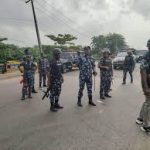
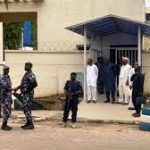
In the aftermath of the Oriire attacks, the official response followed a by-now-familiar pattern. Condemnations were issued. Promises of rescue operations were made. Security agencies were said to have been deployed. A commissioner of police appeared on television to confirm numbers and decline to provide operational details.
None of this is sufficient.
Former Vice President Atiku Abubakar captured the national frustration precisely when he accused President Tinubu of “governing by obituary statements.” Whether one agrees with Atiku’s politics or not, the substance of his criticism is difficult to dismiss. The cycle of mass abduction, presidential condemnation, security deployment, and eventual silence has repeated itself so many times under successive administrations that it has lost all credibility as a governance response.
What Nigerians need is not another press release. They need answers to fundamental questions that have gone unanswered for far too long. How did twelve armed men on motorcycles operate freely enough to plan and execute a coordinated, simultaneous attack on two schools without prior intelligence? Why are rural communities in Oyo State a region not traditionally associated with banditry on this scale now being targeted with the same brazenness once reserved for parts of the Northwest and Northeast? What has changed, and what is the government’s concrete plan to reverse it?
The Oyo State Government, too, must answer for the state of security within its borders. Governor Seyi Makinde has built a reputation as one of Nigeria’s more capable state executives. That reputation now faces its sternest test. The deployment of Amotekun operatives alongside police and vigilantes is a start, but the question of whether those forces are adequately trained, equipped, and coordinated for the threat they face must be confronted honestly, not defensively.
The South Is No Longer Watching From a Distance
For years, the mass abduction of schoolchildren was understood, however wrongly, as primarily a northern Nigerian problem. Chibok was in Borno. Kagara was in Niger. Kankara was in Katsina. The horror was real, but it felt, to many in southern Nigeria, like a distant crisis — terrible, but contained.
Oriire has shattered that comfortable illusion.
The Pentecostal Fellowship of Nigeria was blunt about this: the brutality once largely confined to northern Nigeria has crossed the Niger. This is not a northern crisis or a southern crisis. It is a Nigerian crisis, and it demands a Nigerian response not the compartmentalised, geographically siloed security thinking that has characterised governance for too long, but a unified, national approach that treats a kidnapped child in Oyo with the same urgency as a kidnapped child in Zamfara.
If the federal government cannot muster that urgency if it continues to respond to mass abductions with press releases and promises then it must be asked, plainly and publicly, what it is actually for.
What Must Be Done
Editorials that diagnose problems without proposing solutions are little more than organised complaints. We do not intend to stop there.
First and most urgently, the 45 people still missing in Oyo State including dozens of young children must be rescued. Every available resource, human and technological, must be committed to that mission without delay or compromise. The government must provide daily public updates on the rescue operation. Silence is not operational security; it is abandonment.
Second, those responsible for the Oriire attacks not just the foot soldiers, but the financiers, planners, and logistics networks that made the operation possible must be identified, apprehended, and prosecuted to the fullest extent of the law. Nigeria has a troubling history of high-profile security incidents that result in no meaningful prosecutions. That pattern must end here.
Third, the federal and state governments must jointly develop and fund a comprehensive school security framework for rural and vulnerable communities. This should include perimeter security protocols, emergency communication systems, community intelligence networks, and regular security assessments. The cost of protecting schools is a fraction of the cost human, economic, and social of failing to do so.
Fourth, an emergency review of Nigeria’s national security architecture is overdue. The threat landscape has changed. Bandits and terrorists are now operating across regions that were previously considered relatively stable. The security response must evolve accordingly, with better intelligence sharing, faster response times, and clearer command structures.
Fifth, the survivors of these attacks both those rescued and those who escaped require immediate and sustained psychosocial support. Trauma of this nature does not resolve itself. Children who have been abducted, who have witnessed killings, or who have lived through the terror of an armed raid on their school will carry those experiences for life without proper intervention.
For Michael Oyedokun
We end where we began: with a teacher.
Michael Oyedokun went to school on May 15 to do what teachers do to educate, to guide, to invest in the next generation of Nigerians. He was killed for it, in a manner so savage that it was designed not just to end a life but to terrify a nation.
We must not allow that terror to achieve its purpose.
The appropriate response to an act designed to make Nigerians afraid is not fear. It is resolve the collective, non-negotiable insistence that this country belongs to its citizens, that its children will be educated in safety, and that those who take up arms against the innocent will be held to account.
Michael Oyedokun deserved to grow old in a peaceful country. So do the 39 children still missing. So do all the children in all the rural classrooms across Nigeria who go to school tomorrow, uncertain whether they will come home.
Their safety is not a political issue. It is a moral obligation. And this government like every government before it that has failed them must be held to it.
Standard Focus is committed to holding power accountable and giving voice to those whose stories demand to be told.
© 2026, Standard Focus. All rights reserved. This material, and other digital content on this website, may not be reproduced, published, broadcast, rewritten or redistributed in whole or in part without prior express written permission from STANDARD FOCUS.