




















By Chukwudi Nnaji, Abuja
ABUJA — As political realignments gather momentum ahead of the 2027 general elections, the newly registered Nigeria Democratic Congress (NDC) is making strategic moves to attract key opposition figures, including Labour Party’s 2023 presidential candidate, Peter Obi, and his New Nigeria Peoples Party (NNPP) counterpart, Rabiu Musa Kwankwaso, into a potential joint presidential ticket.
Emerging signals from the party suggest a calculated effort to position itself as a unifying platform for opposition forces seeking to challenge the ruling All Progressives Congress (APC) in the next election cycle.
This development followed a post circulated on X (formerly Twitter) on Sunday, attributed to the NDC, which hinted at a narrow window for both Obi and Kwankwaso to align with the party before its primary election deadline.
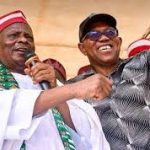
“All we need right now. Just all we need. 2 weeks to deadline,” the message read, accompanied by an image of Obi and Kwankwaso shaking hands and the caption: “Nigeria will be OK.”
The post has since fueled widespread speculation over ongoing backchannel negotiations among opposition leaders, as political actors intensify consultations aimed at building a formidable coalition capable of mounting a strong presidential challenge in 2027.
The momentum around a possible Obi-Kwankwaso alliance has also been reinforced by a growing grassroots mobilisation campaign known as the “OK Movement.” The initiative, driven largely by supporters of both politicians, is advocating for a strategic partnership between the two leaders and is reportedly gaining traction across various
regions of the country.
Sources familiar with the development indicated that discussions around coalition-building have become more pronounced in recent weeks, particularly following the Ibadan opposition summit, where several political stakeholders resolved to explore the option of presenting a single presidential candidate against President Bola Ahmed Tinubu.
Although the NDC was reportedly invited to participate in the Ibadan meeting, it was unable to attend due to what party insiders described as short notice.
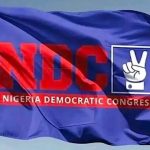
It was gathered that despite the absence of its leadership, the party’s presence was symbolically acknowledged at the venue, as its flags were sighted, suggesting ongoing consultations and possible alignment with other opposition blocs.
However, the authenticity of the viral social media post has been questioned by the party’s leadership.
Reacting to inquiries, the National Secretary of the NDC, Ikenna Morgan, distanced the party from unverified online communications, warning against the proliferation of fake accounts impersonating the party.
“I’m not going to say I handle the party’s Twitter account. A journalist from another news platform called me about it, and I told him I needed to verify from those responsible,” Morgan said.
He further cast doubt on the credibility of the post, citing previous instances where statements falsely attributed to the party were circulated online.
“You see, sometime ago, Sahara Reporters published something said to be from the Twitter handle of the NDC. I doubted that it was a verified handle,” he explained.
“It’s possible that someone who is not even a member of the NDC created that account and made the comment, which Sahara Reporters picked up and turned into news.”
Morgan maintained that only verified social media platforms should be regarded as official channels of the party.
“So, this one you’re referring to now I haven’t seen it but I also do not want to believe it is from a verified handle. I believe all our official handles are verified. If it’s not from a verified handle, then it is not from us,” he said.
Reiterating his position, he added: “If it’s not from our verified handle, it’s not from us. If you check today, there are many Facebook accounts, Twitter accounts, and others claiming to represent the NDC. That is not correct. All our official handles are verified.”
While the party has yet to officially confirm any alliance with Obi or Kwankwaso, the unfolding developments point to an increasingly fluid opposition landscape, where coalition talks, strategic alignments, and political calculations are expected to intensify in the months leading up to the 2027 elections.
© 2026, Standard Focus. All rights reserved. This material, and other digital content on this website, may not be reproduced, published, broadcast, rewritten or redistributed in whole or in part without prior express written permission from STANDARD FOCUS.