
































….To Hold Executive Session on U.S. ‘Religious Persecution’ Debate
….Withdraws Motion on Alleged ‘Christian Genocide’ Narrative
The Senate has clarified that Nigeria’s insecurity and terrorism challenges are not driven by religion but by geography, circumstance, and socio-economic factors.
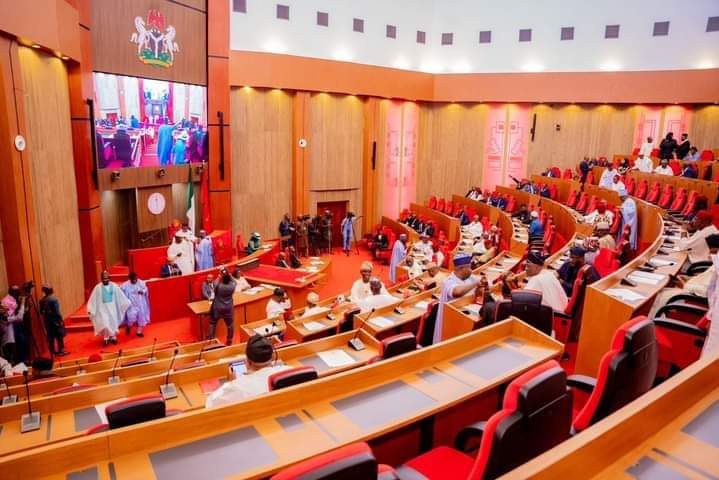
This position was made clear during plenary on Thursday as lawmakers debated a motion titled “Urgent Need to Correct Misconceptions Regarding the Purported ‘Christian Genocide’ Narrative in Nigeria and in the International Community,” sponsored by Senator Ali Ndume (APC, Borno South) and co-sponsored by 20 others.
After extensive debate, the Senate resolved to hold an executive session to deliberate on growing international reports—particularly in the United States—portraying Nigeria as a country that persecutes Christians. However, due to the sensitive nature of the issue, the motion was stepped down.
Senate President Godswill Akpabio, speaking on the matter, emphasized that terrorism in Nigeria affects all communities, regardless of faith.
“If terrorism occurs in a Christian-dominated area, Christians will be the victims; if it happens in a Muslim-dominated area, Muslims will be the victims,” Akpabio said.
He cautioned that misinformation abroad could lead to international sanctions, which might worsen poverty and instability in the country.
“We should have a small team that will visit our colleagues in the U.S. because some people must have gone there to give a one-sided story,” Akpabio added.
Supporting the motion, Senate Leader Opeyemi Bamidele (APC, Ekiti Central) reaffirmed that Nigeria’s security challenges are not religiously motivated.
“As a Senate, it is our conviction that the insecurity challenge is not religion-driven. We will hold an executive session on this issue and report back to plenary,” Bamidele stated.
In presenting the motion, Senator Ndume called for urgent diplomatic engagement with the U.S. Congress and other stakeholders to clarify what he described as “misconceptions” about a supposed Christian genocide in Nigeria.
He warned that such narratives, though sometimes arising from genuine concern, had been amplified by advocacy groups and foreign media, creating negative perceptions of Nigeria abroad.
Ndume explained that insecurity in Nigeria stems from terrorism, banditry, and communal conflicts that have claimed the lives of both Christians and Muslims.
“From Plateau to Zamfara, Borno to Kaduna, both churches and mosques have been attacked by insurgents and criminal groups. These are national security issues, not religious wars,” he said.
The lawmaker reminded his colleagues that the 1999 Constitution guarantees freedom of religion and protection for all citizens, urging the Senate to promote transparency, interfaith harmony, and factual communication to counter extremist propaganda.
In their contributions, several senators backed the call for diplomatic and factual engagement. Senator Aliyu Wammako (APC, Sokoto North) described the “Christian genocide” narrative as divisive misinformation, while Senator Sumaila Kawu (APC, Kano South) warned that the U.S. Congress risked forming “an uninformed opinion” that could endanger both Christians and Muslims.
Senator Jimoh Ibrahim (APC, Ondo South) urged deeper collaboration between the legislature and the executive to strengthen Nigeria’s counter-terrorism framework and improve global understanding of the country’s internal security challenges.
The Senate is expected to hold its executive session in the coming days before deciding on the next steps regarding international engagements and public communication on the issue.
© 2025, Standard Focus. All rights reserved. This material, and other digital content on this website, may not be reproduced, published, broadcast, rewritten or redistributed in whole or in part without prior express written permission from STANDARD FOCUS.