













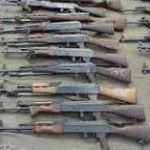







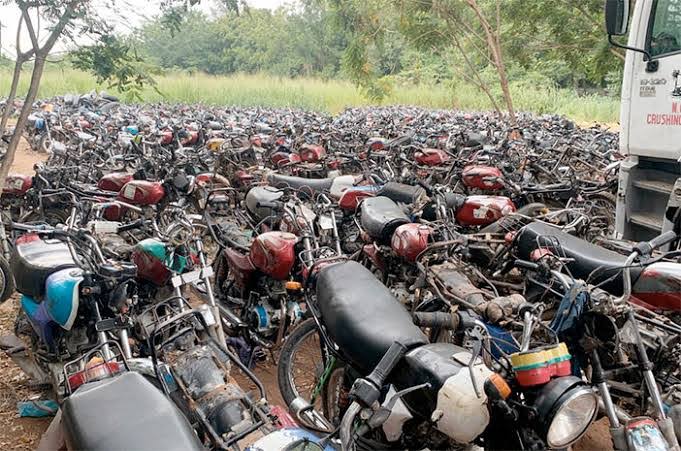
The Sokoto State Government has approved ₦1.759 billion for the procurement of 1,000 Bajaj motorcycles to strengthen the mobility and operational capacity of security agencies in the state.
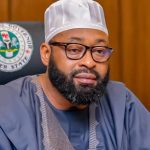
The approval was one of the major decisions reached at the sixth regular meeting of the Sokoto State Executive Council for 2026, chaired by Deputy Governor Idris Muhammad Gobir at the Government House, Sokoto.
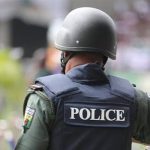
The government said the motorcycles would enable security personnel to access difficult terrains and remote communities where poor road networks often hinder conventional patrol vehicles.
The latest intervention comes shortly after the state government procured 62 armoured vehicles reportedly valued at ₦27 billion for security agencies.
With the deployment of the motorcycles, the government said security personnel would be better equipped to pursue criminals into inaccessible areas and respond more quickly to distress calls.
The intervention is targeted at communities facing recurring cases of banditry, kidnapping, cattle rustling and other forms of criminality.
Beyond security, the council approved ₦723.17 million for the renovation of Government Technical College, Runjin Sambo.
It also approved ₦498.99 million for the rehabilitation of A.A. Raji Special School and ₦489.32 million for the renovation of Phase I of the College of Nursing Sciences.
Another ₦229.36 million was approved for the renovation of male and female hostels at the College of Basic and Remedial Studies.
In agriculture, ₦174.64 million was approved for the renovation of staff quarters and upgrading of the perimeter fence at the College of Agriculture and Animal Science, Wurno.
The council also approved ₦133.67 million for the construction of a perimeter fence at Wamakko Primary Health Centre.
Similarly, ₦93.88 million was approved for vocational learning equipment for 46 women’s vocational centres across the state’s 23 local government areas.
The council approved another ₦90.21 million for PVC pipes and plumbing fittings to maintain 142 semi-urban water supply schemes.
The government said the decisions reflected its efforts to address insecurity while simultaneously investing in education, healthcare, agriculture, skills development and water infrastructure.
© 2026, Standard Focus. All rights reserved. This material, and other digital content on this website, may not be reproduced, published, broadcast, rewritten or redistributed in whole or in part without prior express written permission from STANDARD FOCUS.