




























In any functioning democracy, the right of political parties to assemble, organize, and hold lawful conventions is not a privilege granted at the discretion of the state it is a constitutional guarantee.
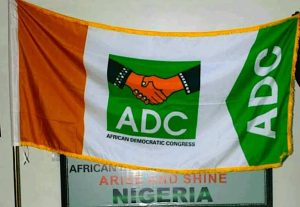
That is why the escalating dispute between the African Democratic Congress and the authorities in the Federal Capital Territory over the use of a designated venue for its national convention deserves serious national reflection.
At the heart of the matter is a simple but consequential question: can a political party be effectively constrained from lawful political activity through administrative bottlenecks, shifting approvals, or alleged withdrawal of facility permissions at the eleventh hour? For the opposition, the answer appears to be an unsettling “yes.” For the authorities, however, the insistence is often framed as adherence to regulations, security considerations, or administrative procedures.Yet in politically charged environments, perception matters almost as much as procedure.
When a major opposition party claims it is being obstructed from accessing a venue for its national convention, the burden on public institutions is not only to act lawfully, but to be seen to be acting transparently, fairly, and without partisan influence.
The role of the FCT administration, overseen by the Minister, Nyesom Wike, has come under scrutiny in this context.
While the Minister and his office are entitled and indeed expected to enforce order, regulation, and compliance in the capital city, they must also ensure that such enforcement does not inadvertently fuel suspicions of political interference or selective application of authority.
This is particularly important in a climate where opposition parties already feel squeezed by what they describe as an uneven political playing field.
Whether or not those grievances are fully justified, the optics of restricting or revoking access to a convention venue for a registered political party can deepen mistrust in democratic institutions and harden political tensions.
The broader concern is not limited to a single party or event. It speaks to the health of Nigeria’s democratic space. Political parties are the lifeblood of electoral democracy, and their ability to meet, mobilize, and organize freely is essential to political competition.
When such activities are hindered whether intentionally or through bureaucratic rigidity the democratic ecosystem suffers.
It is also important to acknowledge that the FCT is a uniquely sensitive jurisdiction. Security concerns, crowd control, infrastructure capacity, and urban regulations are legitimate considerations in approving large-scale political gatherings.
No responsible authority would ignore these factors, particularly in a capital city that hosts national institutions and foreign missions.
However, such considerations must be applied uniformly and transparently.
Any perception that approvals are contingent on political alignment rather than clear and consistent rules risks eroding public trust.
Democracy does not only depend on elections; it depends on the everyday fairness of administrative processes.
This is why the current standoff should be resolved with urgency, clarity, and openness.
If there are genuine regulatory or security concerns regarding the proposed venue, they should be clearly communicated, documented, and accompanied by viable alternatives that allow the party to proceed with its lawful activities without disruption.
If, on the other hand, there are no such impediments, then any delay or restriction must be corrected without delay.Nigeria’s democratic journey has been long and often turbulent.
The country has made progress in consolidating electoral processes, expanding political participation, and strengthening institutions.
But moments like this serve as reminders that democratic consolidation is not only about elections it is about ensuring that no party, regardless of its size or influence, is arbitrarily constrained in its political expression.
Ultimately, what is at stake is not just a venue in Abuja.
It is the principle that political competition must be free, fair, and unimpeded by administrative or political overreach. The credibility of democratic governance depends on how well that principle is protected even in moments of tension.
© 2026, Standard Focus. All rights reserved. This material, and other digital content on this website, may not be reproduced, published, broadcast, rewritten or redistributed in whole or in part without prior express written permission from STANDARD FOCUS.