



















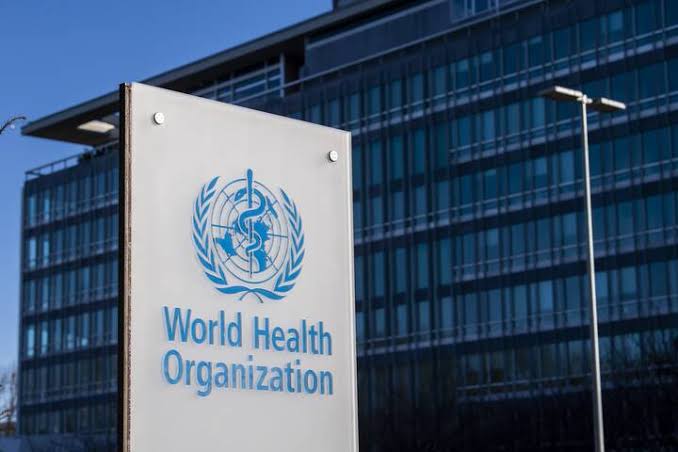
WHO Urges Nigeria, African Nations to Boost Health spending
The World Health Organization,WHO,has called on Nigeria and other African governments to increase public health spending to at least 20 percent of total health expenditure, while reducing out-of-pocket payments that push households into financial hardship.
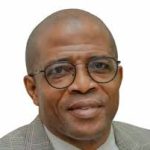
Speaking at the Health Financing Dialogue hosted by the National Health Insurance Authority,NHIA, in Abuja, WHO Regional Director for Africa, Prof. Mohammed Janabi, said sustainable health financing is central to building resilient health systems.
He commended Nigeria’s recent policy reforms ,including the Basic Healthcare Provision Fund ,BHCPF, the NHIA Act, and expansion of state-level insurance schemes , describing them as vital steps toward universal health coverage.
“Pooling and prepayment mechanisms must be strengthened, guided by evidence such as cost-effectiveness and equity analyses. Resources must be used wisely to create a fair and equitable financing structure,” Janabi said.
He urged policymakers to turn the Abuja dialogue into a watershed moment, adding: “Let this Dialogue be remembered as a turning point where commitments become sustained action. Together, we can build a financing system that is inclusive, equitable, and responsive.”
Janabi highlighted Nigeria’s role in championing reforms, noting that with a population of over 223 million, how the country finances healthcare will significantly shape the continent’s future. He also pointed to innovations such as the creation of equity and investment units and the Legislative Network for Universal Health Coverage as models for Africa.
The WHO official reaffirmed the agency’s support for Nigeria’s universal health coverage journey, stressing that health investment is not just a moral obligation but also an economic strategy for resilience and growth.
The African Union (AU) and the Global Fund also lauded Nigeria’s leadership. AU Commissioner for Health, Humanitarian Affairs and Social Development, Amb. Amma Adomaa Twum-Amoah, praised the government’s approval of $1.7 billion for HOPE Projects to strengthen governance, expand primary healthcare, and improve service delivery.
“Amid shifting global financing, climate pressures and humanitarian crises, Nigeria has charted a bold path. If Nigeria gets it right, Africa will get it right,” Twum-Amoah said. She stressed that stronger domestic investment is critical for peace, security, and achieving the AU’s Agenda 2063.
Maria Kirova, speaking for the Global Fund, hailed Nigeria’s progress against HIV, tuberculosis, and malaria, as well as its investments in health infrastructure, surveillance systems, supply chains, and primary care revitalization.
She noted that the dialogue comes at a time of shrinking international aid, making it imperative for African governments to sustain domestic investment in health.
The four-day Abuja Dialogue , the first of its kind in West Africa ,seeks to revive commitments made under the 2001 Abuja Declaration, which urged African nations to dedicate at least 15 percent of their national budgets to health.
It brought together government leaders, parliamentarians, development partners, and health stakeholders to tackle funding gaps undermining access to quality healthcare in Nigeria.
© 2025, Standard Focus. All rights reserved. This material, and other digital content on this website, may not be reproduced, published, broadcast, rewritten or redistributed in whole or in part without prior express written permission from STANDARD FOCUS.