
































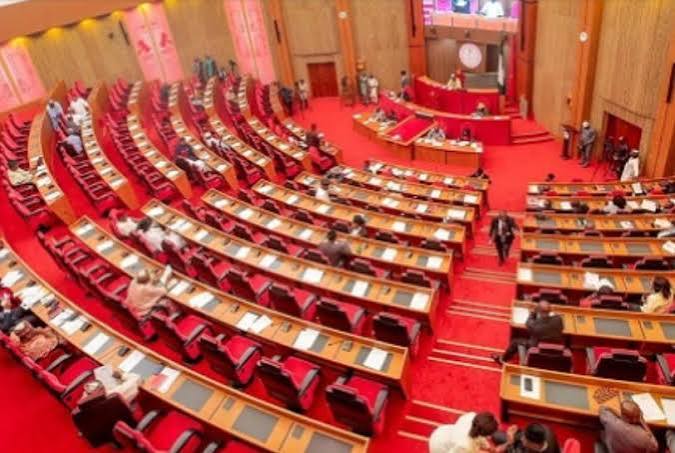
The House of Representatives Committee on the South-South Development Commission has commenced an investigation into the prolonged gas leak in Bille Community, Degema Local Government Area of Rivers State, expressing concern over the environmental and humanitarian impact of the incident nearly one year after it was first reported.
At an investigative session held at the National Assembly in Abuja, the committee questioned officials of the National Oil Spill Detection and Response Agency (NOSDRA) and the Nigerian Upstream Petroleum Regulatory Commission (NUPRC) over the delayed response, conflicting reports and the continued hardship faced by residents.
Chairman of the committee, Hon. Julius Pondi, said the inquiry was aimed at determining the cause of the gas emissions, evaluating the adequacy of the emergency response and ensuring accountability.
He stressed that the committee was not out to apportion blame but to establish the facts, identify regulatory lapses, strengthen environmental governance and ensure justice for the affected community.
Presenting NOSDRA’s findings, Director of Oil Field Assessment, Cyrus Nkangwang, said the agency became aware of the gas seepage in October 2025 following reports from residents.
Investigations confirmed elevated concentrations of methane, hydrogen sulphide and carbon dioxide, groundwater contamination, poor air quality and potential health risks.
Responding to questions from lawmakers, NOSDRA confirmed that the gas emissions had not stopped.
The agency explained that the incident differed from conventional oil spills because it was not linked to any oil facility but involved gas bubbling naturally to the surface, which gradually engulfed the community before attracting public attention.
NUPRC told lawmakers that its active involvement began after a stakeholders’ meeting convened by the Ministry of Petroleum Resources on February 4, 2026.
The commission disclosed that joint investigations involving Renaissance Africa Energy, Newcross Exploration and Production, NNPC Eighteen Operating Limited and host community representatives detected methane emissions across approximately 1.5 kilometres of the community.
According to NUPRC, geological, geophysical and laboratory investigations found no evidence connecting the gas seepage to existing oil and gas infrastructure.
Officials explained that findings suggested the gas was migrating from deep underground reservoirs rather than pipelines or production facilities, prompting further scientific investigations to determine the source, trigger and migration pathways.
The commission described the incident as unprecedented in Nigeria’s petroleum industry, noting that although similar occurrences had been recorded elsewhere globally, the extent, duration and intensity of the emissions in Bille made the case unique.
Lawmakers questioned why residents had continued to suffer while investigations remained ongoing.
In response, NUPRC said no operator had been found responsible, but the petroleum industry had intervened through corporate social responsibility initiatives.
The commission disclosed that relief materials had been delivered to the community, while medical outreach, potable water supply and safety interventions were being implemented as technical investigations continued.
NUPRC also admitted that both the community’s air and water had been contaminated.
Officials said temporary venting systems had been installed to channel the gas above rooftop level and reduce fire risks but maintained that a permanent solution would only be possible after identifying the exact source of the seepage.
The hearing also revealed discrepancies between reports submitted by NOSDRA and NUPRC.
Lawmakers queried a section of NOSDRA’s report suggesting NUPRC had no pipeline records in the area, a claim the commission rejected, insisting it had complete records of all pipelines, operating conditions and related infrastructure.
NOSDRA explained that the statement reflected discussions from an earlier stakeholders’ meeting and acknowledged it could have created a misleading impression.
Several lawmakers criticised what they described as the slow pace of response to the crisis, with some suggesting that relocation of the community might become unavoidable if the leak could not be stopped.
Members also called for the immediate involvement of the National Emergency Management Agency (NEMA), describing the situation as a humanitarian emergency.
The committee further questioned why the Environmental Remediation Fund established under the Petroleum Industry Act had not been activated.
NUPRC explained that although the fund was operational, remediation could not begin until investigators identified and halted the source of the gas seepage.
The commission also disclosed that it had advised the Rivers State Government to consider a managed evacuation of residents pending the outcome of health and environmental risk assessments, warning that laboratory results showed the presence of gases unsafe for prolonged human exposure.
Pondi assured residents that the committee would sustain its oversight until a lasting solution was achieved, stressing that protecting lives and the environment remained its priority.
© 2026, Standard Focus. All rights reserved. This material, and other digital content on this website, may not be reproduced, published, broadcast, rewritten or redistributed in whole or in part without prior express written permission from STANDARD FOCUS.