




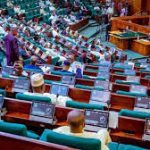








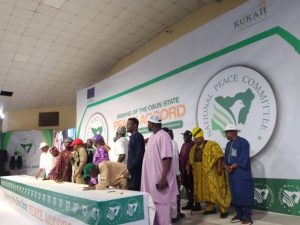












Presidential candidates and other political leaders have exchanged sharply contrasting views on security, policing, fuel subsidy and economic reforms at the Nigerian Bar Association conference in Port Harcourt.
The second panel session, which featured several presidential candidates, focused on the country’s security architecture, state policing, elections and fuel subsidy.
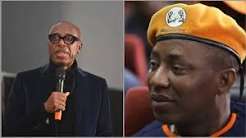
Former Rivers State Governor and ADC vice-presidential candidate, Rotimi Amaechi, argued that Nigeria’s economic recovery required job creation, local production and increased money circulation.
Amaechi said his administration in Rivers State constructed more than 500 primary schools, over 300 health centres and more than 200 roads, while also reducing insecurity through intelligence gathering.
He said he preferred community policing to state police because local communities were better positioned to identify emerging threats.
The issue of state policing attracted broad support from the candidates, although the SDP presidential candidate, Adewale Adebayo, proposed a three-tier policing arrangement involving federal, state and local governments.
Omoyele Sowore and Adebayo argued that a change of leadership was necessary to tackle Nigeria’s security challenges.
On fuel subsidy, Sowore criticised the policy and questioned who ultimately benefited from subsidy arrangements.
“If there is anybody that has been consistent in the removal of fuel subsidy, it has been me. The question about fuel subsidy is: who are you subsidizing? You are subsidizing the elite. You are subsidizing the governors,” he said.
Presidential candidate of the Nigeria Democratic Congress, Peter Obi, emphasised production and poverty reduction as critical to addressing insecurity.
“Nigeria must move from a consumption country to a production country. We must invest heavily in agriculture,” Obi said.
Former Cross River State Governor Donald Duke said leadership remained the central issue confronting the country.
“If we get the leadership right, everything else will fall into place,” he said.
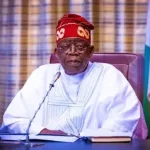
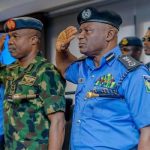
Meanwhile, Chief of Staff to the President, Femi Gbajabiamila, defended the Federal Government’s proposed state policing reforms.
In a keynote address titled “Policing in Transition,” Gbajabiamila said the government was attempting to address longstanding weaknesses in the country’s centralised policing structure.
“Centralized policing without safeguards will bring about more chaos,” he said.
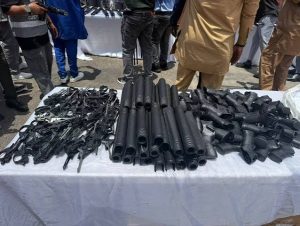
He noted that Nigeria had approximately one police officer for every 650 people, compared with an international benchmark of one officer to 450 people.
Gbajabiamila also stressed the need for professional training, effective oversight and safeguards against political interference.
“Who polices the police?” he asked, arguing that governors should have executive authority but should not be permitted to use police powers against political opponents.
He said officers who refused unlawful orders should also be protected by strengthened institutions.
© 2026, Standard Focus. All rights reserved. This material, and other digital content on this website, may not be reproduced, published, broadcast, rewritten or redistributed in whole or in part without prior express written permission from STANDARD FOCUS.