
































The Ebola outbreak in the Democratic Republic of the Congo (DRC) has worsened significantly, with 4,665 confirmed cases and 2,184 deaths recorded as of August 12, 2026, according to the World Health Organisation (WHO).
The latest figures represent a crude case fatality ratio of 46.8 per cent and have heightened concerns over the potential for the disease to spread beyond the country’s borders.
The outbreak, which began in the Mongbwalu health zone in Ituri Province, has now spread to 54 health zones across six provinces — Ituri, North Kivu, South Kivu, Haut-Uélé, Tshopo and Bas-Uélé.
The WHO described the outbreak as the largest Bundibugyo virus disease (BVD) outbreak ever recorded in the country and said it was expanding at a faster pace than previous Ebola outbreaks.
The situation deteriorated further during epidemiological week 32, covering August 3 to 9, when 579 cases and 304 deaths were reported — the highest weekly figures recorded since the outbreak began.
The agency said the increasing number of infections, wider geographical spread and high mortality rate pointed to a rapidly evolving public health emergency.
Bas-Uélé became the latest province to report a case after a confirmed infection was detected in the Buta health zone. The patient, who had travelled from Haut-Uélé, reportedly developed symptoms on August 4.
The WHO said the outbreak was increasingly characterised by sustained transmission across interconnected geographical clusters, making containment more difficult.
It also warned that insecurity, population displacement, high mobility and cross-border movements linked to the humanitarian crisis in the DRC were creating additional challenges and increasing the possibility of further transmission.
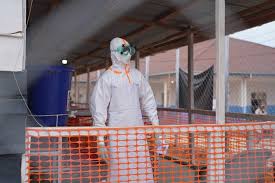
National authorities, working with WHO and other partners, have intensified response efforts, including the expansion of treatment centres and training of health and care workers.
Following recent missions to the DRC, WHO Director-General, Dr Tedros Adhanom Ghebreyesus, the WHO Regional Director for Africa and the Director-General of the Africa Centres for Disease Control and Prevention (Africa CDC) identified enhanced surveillance and stronger engagement with affected communities as key priorities.
Meanwhile, countries that have recorded imported cases continue to maintain heightened surveillance.
France has recorded no secondary transmission since an imported BVD case was detected on June 24. As of August 14, 41 days had elapsed since the patient was discharged on July 4 without any additional confirmed case.
In Uganda, the most recent imported case was discharged from a treatment centre on July 16. The country’s 42-day enhanced monitoring period is expected to end on August 27, provided no new case is detected.
However, WHO said Uganda remained vulnerable to re-introduction because of continued transmission in neighbouring DRC, population movements and the possibility of cross-border infections.
A regional preparedness and prioritisation framework remains in place to assist countries across Africa in strengthening surveillance, preparedness and response measures.
The WHO and its partners have called for an urgent scale-up of interventions to contain transmission and prevent the outbreak from spreading further across borders.
© 2026, Standard Focus. All rights reserved. This material, and other digital content on this website, may not be reproduced, published, broadcast, rewritten or redistributed in whole or in part without prior express written permission from STANDARD FOCUS.