



























ABUJA — West Africa could unlock a cumulative $3 trillion energy market by 2035 if countries in the region deepen integration, harmonise regulations and invest in shared energy infrastructure, Chairman of RHS Advisory Ltd, Mallam Suleiman Yahyah, has said.
Yahyah made the submission at the West Africa Refined Fuel Market (WAFRFM) Conference 2026 in Abuja while presenting a paper titled, “Driving Infrastructure Growth Through Strategic Regional Partnership.”
He said the target would require a common regional energy framework that would facilitate seamless cross-border operations, trade and investment.
According to him, licensed operators should be allowed to conduct business across West African countries under harmonised rules.
“We need to harmonise activities so that an operator licensed in Ghana can operate and trade in Nigeria. That means having common product specifications, shared data standards, modern energy contracts, regional infrastructure and an effective dispute resolution mechanism. If we achieve this, it is possible to build a cumulative $3 trillion market by 2035,” he said.
Yahyah noted that although Africa accounts for about 20 per cent of the world’s population and produces 7.5 per cent of global hydrocarbons, more than 600 million Africans still live in energy poverty, while over one billion people lack access to clean energy.
He said West African countries must pursue market integration, connect with global trading platforms and establish efficient fiscal settlement systems to facilitate energy transactions.
To improve market liquidity, he called on central banks to collaborate with institutions including the African Finance Corporation (AFC), African Development Bank (AfDB) and the proposed African Energy Bank to establish a regional settlement facility.
He estimated the proposed facility at $3 billion and said it could be anchored on the naira while leveraging existing payment systems rather than creating entirely new structures.
“Without liquidity, it is impossible to create an efficient African or West African energy market,” he said.
Yahyah also stressed the importance of developing skilled African professionals capable of regulating the market, facilitating energy trading and providing legal and technical expertise for regional joint ventures.
He advocated stronger partnerships with global data and pricing organisations such as S&P Global, Argus Media and Bloomberg to ensure that the region’s energy market meets international standards.
He also recommended the deployment of Artificial Intelligence to improve market efficiency and facilitate real-time decision-making.
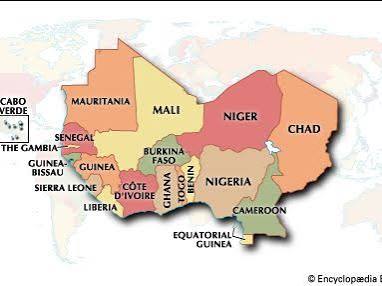
On regional infrastructure, Yahyah proposed Senegal as the western gateway for production, Abidjan as the commercial and logistics hub, Ghana as the balancing and storage centre and Lagos as the Atlantic hub for liquidity and refinancing.
He said regional integration should build on existing infrastructure, including the West African Gas Pipeline and regional road networks, to facilitate cross-border energy trade.
“Every pipeline, refinery, interconnector or storage facility must answer one question: Does it increase productive energy access for the people and businesses? If the answer is no, it is not development,” he said.
Osun poll: Adeleke declares Friday work-free day for workers
© 2026, Standard Focus. All rights reserved. This material, and other digital content on this website, may not be reproduced, published, broadcast, rewritten or redistributed in whole or in part without prior express written permission from STANDARD FOCUS.