


















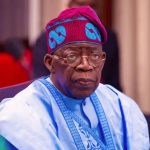










Former Vice President, Atiku Abubakar, has sharply criticised President Bola Ahmed Tinubu over recent comments linking Nigeria’s economic situation to fuel price comparisons with other African countries, describing the argument as misleading and disconnected from reality.
Atiku, through a statement issued Saturday by his Senior Special Assistant on Public Communication, Phrank Shaibu, accused the president of presenting a distorted picture of the hardship facing millions of Nigerians.
The statement was in response to remarks credited to Tinubu in Bayelsa State, where he reportedly justified rising living costs by noting that petrol prices in Nigeria remain lower than in some African nations.
But Atiku’s camp rejected the comparison, insisting that focusing on fuel prices alone ignores the deeper economic realities confronting citizens.
“Nigerians don’t live on petrol they live on income,” Shaibu said, arguing that any meaningful assessment of living standards must take into account wages, purchasing power, and the overall cost of living.
While acknowledging that petrol prices in Nigeria may be lower than in countries like Kenya and South Africa, the statement stressed that such comparisons collapse when weighed against income levels.
According to Shaibu, Kenya’s GDP per capita is nearly twice that of Nigeria, with a minimum wage earner in Nairobi earning the equivalent of about ₦170,000 more than double Nigeria’s ₦70,000 national minimum wage. He argued that Nigerians therefore earn significantly less while grappling with what he described as a higher cost of living.
The former vice president’s aide also faulted Nigeria’s uniform minimum wage structure, contrasting it with Kenya’s tiered system, which adjusts wages based on regional cost variations.
He said the failure to reflect such disparities in Nigeria has worsened the financial strain on citizens, particularly in urban centres where living costs are significantly higher.
Shaibu described it as “deeply disappointing” that at a time Nigerians expect empathy and decisive action, the government appears to rely on what he termed “statistical convenience.”
He warned that selective comparisons in the face of rising inflation, poverty, and declining living standards could reinforce perceptions that the administration is out of touch with the realities on the ground.
“The government must confront the full scope of the economic crisis rather than seek refuge in arguments that collapse under the weight of facts,” he said.
“Nigerians are not asking for comparisons. They are demanding relief.”
© 2026, Standard Focus. All rights reserved. This material, and other digital content on this website, may not be reproduced, published, broadcast, rewritten or redistributed in whole or in part without prior express written permission from STANDARD FOCUS.