



















The Nigerian Civil Aviation Authority (NCAA) and Senator Orji Uzor Kalu have engaged in a public war of words over allegations that Nigerian pilots operate under the influence of drugs and lack proper oversight from regulatory authorities.
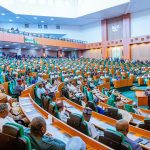
Kalu, who represents Abia North Senatorial District, had during plenary in the Senate alleged that some Nigerian pilots use Indian hemp before flying and evade detection due to poor monitoring by the NCAA.
He claimed to have personally witnessed lapses in pilots’ preparedness, accusing the aviation regulator and related agencies of failing to conduct on-the-spot drug assessments.
“I have refused to fly on several occasions because some pilots were not properly prepared. Some even use Indian hemp. The NCAA and NAMA are not checking drug use among pilots. Nobody checks their blood pressure before they board. This is dangerous,” the lawmaker said.
Kalu also suggested that modern aircraft could operate with minimal human intervention, claiming that “a Boeing 737-500 has an automatic landing gear and can land by itself using autopilot.”
NCAA Dismisses Allegations
In a swift rebuttal, NCAA’s Director General, Captain Chris Najomo, described Kalu’s claims as baseless and misleading, insisting that the Nigerian aviation system maintains strict compliance with international safety standards.
“No pilot is allowed to operate a Nigerian-registered aircraft without holding a valid licence and current medical certificate, as stipulated by the Nigeria Civil Aviation Regulations (Nig. CARs),” Najomo said in a statement.
He explained that pilots undergo comprehensive medical evaluations by NCAA-authorised aviation medical examiners before certification, covering cardiovascular, neurological, psychological, and other critical health assessments.
“These examinations also include drug and alcohol screening. Any pilot who fails to meet the medical fitness criteria cannot be cleared to fly,” he added.
Strict Safety Oversight
Najomo emphasised that NCAA conducts routine and random drug and alcohol tests on flight crew and carries out daily ramp inspections at airports nationwide to verify pilots’ credentials and general fitness for duty.
He cited the recent suspension of a ValueJet pilot in August 2025 for procedural violations as evidence of the agency’s zero-tolerance stance on safety breaches.
“It is therefore inaccurate to suggest that pilots operate under the influence of substances or without proper checks. Nigeria’s safety oversight system meets the International Civil Aviation Organisation (ICAO) standards,” Najomo stated.
Clarifying Autopilot Misconception
Addressing Kalu’s claim that modern aircraft can land automatically, the NCAA boss clarified that while some airplanes have autopilot and autoland features, these systems operate only under specific conditions and never replace pilot control.
“All take-offs are manual, and although autoland exists, it requires specific airport certification. No Nigerian airport currently has Category III (CAT III) certification for fully automatic landings,” he said.
Najomo reaffirmed NCAA’s commitment to maintaining the highest safety standards, adding that the authority would continue to uphold global best practices to ensure passenger safety and airspace integrity.
© 2025, Standard Focus. All rights reserved. This material, and other digital content on this website, may not be reproduced, published, broadcast, rewritten or redistributed in whole or in part without prior express written permission from STANDARD FOCUS.