




































….warns of shrinking opportunities, calls for urgent reforms
By Ali Isah, Abuja
Organised Labour on Wednesday raised alarm over the state of employment in Nigeria, declaring that rising insecurity and deepening poverty are major threats to job creation and decent work across the country.
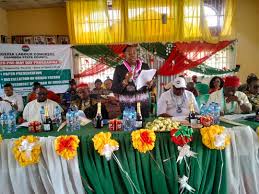
President of the Nigeria Labour Congress (NLC), Comrade Joe Ajaero, who spoke at a Pre-May Day lecture in Abuja, warned that the twin challenges are steadily eroding economic opportunities and worsening unemployment.
“Unless insecurity and poverty are urgently addressed, the nation will continue to struggle with rising unemployment and the collapse of decent jobs,” Ajaero said.
He revealed that about 90 per cent of jobs in Nigeria are concentrated in the informal sector, where workers lack job security, pensions, and decent working conditions.
“Decent jobs are gradually vanishing across industries, and this trend is worsening inequality and poverty. If insecurity is tackled, farmers will return to their farms, food production will improve and jobs will expand,” he added.
Ajaero also pointed out that even workers in the formal sector face challenges such as weak pension compliance and poor working conditions, while the dominance of informal employment leaves millions without stable income or social protection.
He called for urgent policy interventions, warning that failure to act could undermine national productivity and economic growth.
Also speaking, President of the Trade Union Congress (TUC), Comrade Festus Osifo, described the lecture theme, “Insecurity, Poverty: Bane of Decent Work,” as timely, given the growing threats to livelihoods and productivity.
“Insecurity and rising poverty levels are undermining livelihoods, reducing productivity, and threatening the realisation of decent work for millions of Nigerian workers,” Osifo said.
He urged government and stakeholders to move beyond rhetoric and take concrete steps to address the challenges, stressing that meaningful progress in the labour sector depends on deliberate actions that prioritise workers’ welfare and economic stability.
In his contribution, Director of the Abuja School of Social and Political Thoughts, Dr. Sam Amadi, linked insecurity to significant economic losses, fear, and declining productivity.
“Insecurity drives massive economic losses and wealth transfer to criminals. It creates fear, reduces productivity, limits labour mobility, and weakens investment, thereby distorting economic activity away from productive work,” he said.
Amadi also blamed weak labour laws and poor social protection systems, calling for stronger labour solidarity and non-partisan activism to enhance accountability.
ILO Nigeria Workers’ Rights Specialist, Inviolata Chinyangarara, noted that poverty continues to undermine decent work, referencing the 1944 Philadelphia Declaration which links poverty to threats against shared prosperity.
She said rising informality reflects governance failures, pointing to youth unemployment, underemployment, and food insecurity as indicators of a weakening social contract.
According to her, urgent reconstruction is needed through evidence-based policies and stronger social dialogue involving labour unions, with decent work as a central goal.
Delivering a keynote address, international relations expert, Dr. Kunle Olawunmi, urged both government and labour to rebuild trust and prioritise the creation of decent jobs.
“Nigeria cannot build a productive economy on frightened communities and hungry households. The question is whether working in Nigeria still guarantees dignity, security and hope,” he said.
Citing data from the National Bureau of Statistics, Olawunmi argued that unemployment figures can be misleading in the face of widespread informality and underemployment.
He described poverty as a “national security emergency” and insecurity as a major disruptor of economic life.
“A minimum wage without effective governance will not translate into improved living standards. Insecurity is not only the presence of violence; it is the destruction of normal economic life. When insecurity spreads, productivity declines and workers lose their means of livelihood,” he added.
He emphasised that decent work, as defined by International Labour Organisation standards, includes fair income, workers’ rights, social protection, and dignity, calling for deeper collaboration between government and labour to achieve inclusive growth.
© 2026, Standard Focus. All rights reserved. This material, and other digital content on this website, may not be reproduced, published, broadcast, rewritten or redistributed in whole or in part without prior express written permission from STANDARD FOCUS.