





















By Abdulahi Musa
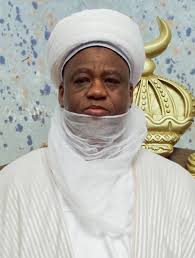
ABUJA — The Sultan of Sokoto, Sa’ad Abubakar III, on Wednesday dismissed fears of any religious agenda against Christians in Nigeria, stating unequivocally that Muslims are not planning to eliminate Christians, as religious and government leaders called for a shift in how the nation interprets its conflicts.
Speaking at the first triannual meeting of the Nigeria Inter-Religious Council (NIREC) in Abuja, which he co-chairs, the Sultan said much of the violence often attributed to religion is widely misunderstood, fuelling suspicion and mistrust.
“We are not in any position whatsoever to remove Christians from Nigeria. It is not possible,” he said, stressing the need for peaceful coexistence built on mutual respect and understanding.
The meeting also featured the President of the Christian Association of Nigeria (CAN), Daniel Okoh, and the Secretary to the Government of the Federation, George Akume, who all underscored dialogue and religious literacy as key to national cohesion.
The Sultan urged Nigerians to avoid framing criminal acts as religious conflicts, insisting perpetrators should simply be identified as criminals.
“Let us get the narrative right. It is not about religion. Let us stop bringing religion into it.
Call them what they are criminals,” he said, adding that violent acts carried out in the name of Islam contradict the faith.
He warned against false claims of religious authority, linking the problem to ignorance.
“Understanding Arabic does not make anyone a Sheikh. Literacy is very important,” he noted.
Reiterating the importance of dialogue, the Sultan described it as the only viable path to peace, emphasizing trust as a critical element in interfaith relations.
On extremists invoking religion to justify violence, he was unequivocal: those who kill innocent people while shouting religious slogans would face divine punishment.
Earlier, CAN President Okoh advocated deeper religious literacy, describing it as essential to fostering respect and reducing tensions.
“Religious literacy goes beyond academic knowledge of doctrines; it involves awareness, sensitivity, and respect for others’ beliefs,” he said, noting that many conflicts are wrongly framed along religious lines despite having social, economic, or political roots.
He added that NIREC remains a strong example of interfaith cooperation, demonstrating shared values of peace, justice, and human dignity.
In his remarks, Akume linked ignorance to conflict, warning that misunderstanding breeds division, while knowledge promotes trust.
“Where there is ignorance, suspicion can take root. But where there is knowledge and empathy, trust can flourish,” he said.
He called for stronger institutional support through education, urging schools and communities to promote inclusive and accurate teachings about religions while rejecting divisive narratives.
On security, the SGF stressed the need to end attacks on education, particularly incidents involving the abduction of students.
The meeting brought together key religious and government stakeholders at a time of persistent insecurity and growing mistrust, with a shared consensus that mutual understanding and dialogue are indispensable to Nigeria’s unity.
© 2026, Standard Focus. All rights reserved. This material, and other digital content on this website, may not be reproduced, published, broadcast, rewritten or redistributed in whole or in part without prior express written permission from STANDARD FOCUS.