








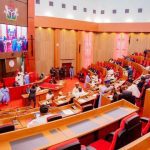


















The Chartered Risk Management Institute of Nigeria (CRMI) on Thursday cautioned lawmakers against passing the proposed bill seeking to establish the Chartered Institute of Enterprise Risk Management of Nigeria.
The institute described the move as the growing duplication of professional institutions in the country’s legislative space,saying the country already has a legally established and functional body that oversees risk management practice.
In a memorandum submitted to the House Committee on Commerce, the Registrar of CRMI, Victor Olannye, said the bill seeking to establish the new institute overlaps with the functions of the already existing Chartered Risk Management Institute of Nigeria.
According to him, “Upon careful review of the bill, we wish to draw the Committee’s attention to certain issues surrounding the proposed legislation, specifically its overlap with existing laws and its implications for the integrity of the legislative process.”
Olannye explained that the 9th National Assembly had already passed the Chartered Risk Management Institute of Nigeria Act No. 39 of 2022, which was duly assented to by the President and gazetted, thereby conferring legal status on the Institute.
“The Act comprehensively governs and promotes the practice of risk management in Nigeria, including professional certification, regulation, and the advancement of the profession,” he said.
He pointed out that the primary objective of the proposed Chartered Institute of Enterprise Risk Management of Nigeria, to control and promote the practice of risk management, is already fully addressed by the 2022 Act.
“As such, the proposed bill duplicates functions and responsibilities already legislated under the existing law,” he said.
Olannye noted that the legislature has consistently frowned upon the unnecessary proliferation of professional bodies, particularly when their mandates are already covered by existing legislation.
“Creating overlapping institutions not only leads to inefficiency and confusion within the profession but also undermines the integrity of the legislative process,” he added.
He therefore urged the Committee to consider dropping the bill, noting that allowing it to progress would “contradict existing legislation (Act No. 39 of 2022), create legal and institutional conflicts, undermine the principle of avoiding duplication and redundancy in laws, and weaken the credibility and authority of the legislature’s previous actions.”
Olannye stressed that maintaining the integrity and coherence of the legislative framework was paramount, urging the Committee to uphold the existing law and reject the proposed bill.
He commended the Committee for its diligence and professionalism, saying, “The Governing Council wishes to commend the Committee for its unwavering diligence and commitment to upholding the principles of lawmaking. Your meticulous approach to legislative oversight and your dedication to ensuring that every bill aligns with the broader goals of national progress reflect the highest standards of legislative professionalism.”
Speaking during the meeting, the Chairman of the Commitee Rep.Ahmed Munir said that the proposed legislation covering critical sectors of the economy aims to establish new regulatory bodies, amend existing laws, and strengthen existing legal frameworks to ensure optimal service delivery.
Recall that both chambers of the National Assembly are currently considering bills on the economy, particularly on issues concerning regulatory frameworks, ease of doing business and tax remittance, among others.
Item 4 of the House Legislative Agenda focuses on reforms related to economic restructuring, diversification, and agricultural development. Meanwhile, the Committee on Constitution Review has received memoranda from the public on measures to enhance the capital market’s transparency, liquidity, and depth, aiming to attract both domestic and foreign investors.
Addressing participants at the events, Munir highlighted the potential of the bills to turn around the economy, if they become laws of the Federal Republic of Nigeria.
“A critical look at these bills shows that both the legislature and the executive have the interest of the citizens at heart. Some of these bills, if passed, will create regulatory institutions that ensure professionalism, accountability, and efficiency across the various sectors,” the lawmaker said.
One of the proposed legislation that was deliberated on was the Bill for an Act to establish climate resilient commerce in Nigeria, which aims at “Creating a framework for promoting sustainable economic growth and reducing the vulnerability of Nigerian businesses to climate-related risks.”
He also called for collaboration between the relevant arms of government to give the bills the required push needed to make laws out of them.
“The importance of synergy between the legislature and the executive toward good governance and human capital development cannot be overemphasised. Bills like this will help moderate potential damage, reduce long-term risks, and enable us to benefit from global and local opportunities associated with climate change mitigation,” he added.
In all, the Committee considered ten bills, including those with a focus on enacting or amending laws to establish professional and regulatory bodies such as the Chartered Institute of Nigerian Universities Professional Administrators, the Institute of Chartered Biochemists and Molecular Biologists and the Chartered Institute of Mortgage Bankers and Brokers, among others.
One of the bills is seeking amendments to the Nigerian Export Promotion Council Act and the National Institute of Marketing of Nigeria Act 2003.
The Kaduna lawmaker lauded the President Bola Tinubu-led administration for stabilising key economic indicators, including achieving a 3.9% yearly Gross Domestic Product growth and improving revenue generation and disbursement.
Although Munir admitted that the Federal Government’s reforms have caused difficult pains for Nigerians, the gains expected in the years ahead would make up for the losses.
“What is left is the healing of the wound, ensuring that the gains at the macro level translate into micro-level improvements for our people. This requires expanding social protection schemes, ensuring transparency in public finance, tackling food insecurity, and addressing inflation and trade barriers,” he added.
© 2025, Standard Focus. All rights reserved. This material, and other digital content on this website, may not be reproduced, published, broadcast, rewritten or redistributed in whole or in part without prior express written permission from STANDARD FOCUS.