


























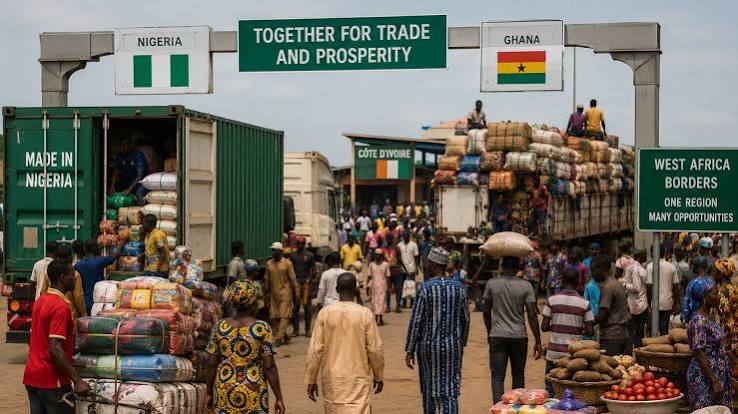
About 95 per cent of cross-border trade in Africa is still conducted through barter, according to Vice President of the West Africa Association for Cross-border Trade, Salami Alasoadura.
Alasoadura disclosed this during an interview on Channels Television while discussing efforts to improve trade corridors between Nigeria, Cameroon and other African countries.
He said many traders could not access foreign currencies needed to conduct formal cross-border transactions, making barter a practical alternative.
“The issue is 95 per cent of the trade we are doing in Africa is through barter. Bring this thing, you bring this one that is the way we work,” he said.
Alasoadura also claimed that about 85 per cent of livestock traded at Maigatari Market in Jigawa State came from neighbouring countries.
“At Maigatari market, people from Niger and Chad bring livestock. I can say it in public, 85 per cent of livestock at Maigatari market is coming from other countries. In that market, we sell manufactured goods to them,” he said.
He questioned the practicality of expecting poor traders to obtain dollars or pounds for routine cross-border transactions.
“How can you ask a poor man from Ikom in Cross River, and a poor man from Mfum in Cameroon, to go and look for dollars? Where do you want him to go and look for that money?” he asked.
Alasoadura also expressed reservations about efforts to introduce the Eco as a common regional currency, recalling his involvement in early discussions on the initiative.
He argued that poor infrastructure, insecurity and multiple transit levies were undermining regional trade.
He said insecurity had forced traders to use longer routes, increasing transportation costs.
According to him, traders travelling between West African countries could be forced to add hundreds of kilometres to their journeys because of insecurity and closed border routes.
He urged governments to prioritise road infrastructure, security and the reduction of multiple transit charges.
Stakeholders from West and Central Africa recently agreed to establish a continental border market linking Nigeria and Cameroon through Mfum, Gamboru and Mubi border points.
Alasoadura said the initiative was designed to improve regional trade and strengthen small and medium-sized enterprises under the African Continental Free Trade Area.
© 2026, Standard Focus. All rights reserved. This material, and other digital content on this website, may not be reproduced, published, broadcast, rewritten or redistributed in whole or in part without prior express written permission from STANDARD FOCUS.