




































By Amina Salisu, Abuja
The Senate has directed the Nigeria Centre for Disease Control (NCDC) to submit a detailed report on the country’s readiness to manage infectious disease outbreaks following a confirmed case of COVID-19 in Cross River State.
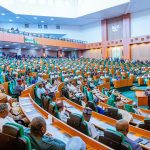
The directive came on Tuesday after the upper chamber adopted a motion highlighting urgent gaps in Nigeria’s public health emergency preparedness and response framework.
Lawmakers specifically requested the NCDC to provide information on stock levels of critical supplies, laboratory capacity, surveillance deficiencies, and overall response readiness indicators.
The confirmed case involved a 53-year-old foreign national who arrived in Nigeria through the Murtala Muhammed International Airport, Lagos, on March 17, 2026, travelled to Calabar the same day, developed symptoms on April 12, and tested positive on April 16 after PCR confirmation at the National Reference Laboratory.
The Senate also urged the Federal Government, through the Ministry of Finance, to fast-track the release of funds and explore emergency financing mechanisms to strengthen outbreak response capacity.
The resolution followed a motion sponsored by Senator Ipalibo Banigo, who raised concerns over systemic weaknesses in the country’s health security architecture.
The Senate further called on the Federal Ministry of Health and Social Welfare, alongside the NCDC, to scale up surveillance, testing, and contact tracing efforts in line with national response protocols.
It emphasized the importance of intensified public health communication to curb misinformation, reduce public anxiety, and promote adherence to preventive measures nationwide.
In addition, state governments were urged to reinforce their outbreak preparedness systems through improved funding, timely procurement of essential medical supplies, and stronger support for surveillance and rapid response mechanisms.
Presenting the motion, Banigo warned that epidemiological findings surrounding the confirmed case suggested a timeline beyond the typical incubation period, raising concerns about possible local transmission.
She noted that additional suspected cases are currently under investigation, with contact tracing ongoing.
The lawmaker highlighted challenges facing the NCDC, including delayed budget releases, procurement bottlenecks, and inadequate funding since 2025, which she said have limited the agency’s operational effectiveness.
According to her, previous outbreaks such as COVID-19, Lassa fever, and Ebola demonstrated that weak coordination and delayed response significantly worsen public health outcomes.
She cautioned that persistent gaps in preparedness such as shortages of personal protective equipment and diagnostic tools could expose frontline health workers to greater risk and undermine the country’s ability to contain future outbreaks.
Banigo stressed that failure to urgently address funding and supply chain constraints could escalate preventable health emergencies and erode public confidence in Nigeria’s health system.
© 2026, Standard Focus. All rights reserved. This material, and other digital content on this website, may not be reproduced, published, broadcast, rewritten or redistributed in whole or in part without prior express written permission from STANDARD FOCUS.